Episode 13 - bonus
After Hours Bonus - with Namisha Kantharia
After Hours Bonus - with Namisha Kantharia
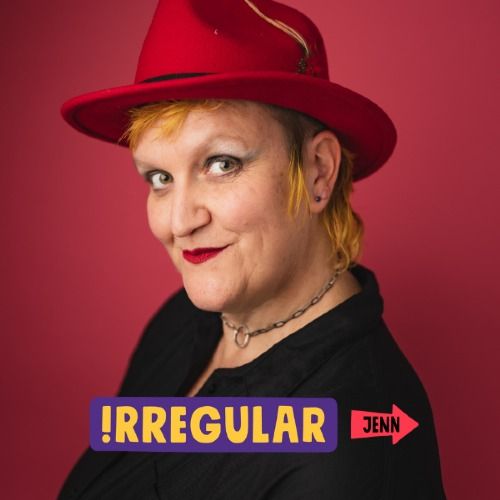
Jenn wilson
“My being miserable didn’t help a single patient. But my being joyful gives me energy to help people.” — Nimisha
Jenn Wilson is joined by guest Nimisha Kantharia (she/her) – Surgeon, Artist, Writer, Mindfulness Teacher
After Hours Bonus Episode Overview
In this joyful and reflective bonus episode, Jenn Wilson and Nimisha explore the power of front-loading joy, trusting your instincts, and reclaiming self-care. Nimisha shares how process art became a source of healing and fuel for her activism, and how watching her daughter helped her unlearn productivity myths and embrace emotional expression. Together, they challenge the idea that rest and pleasure must be earned, and offer a compassionate reframe: joy is not a reward—it’s a resource. This episode is a permission slip to invest in what lights you up.
Join Our Mailing List HERE
Connect with Nimisha
• Website: https://notjustmindfulness.com
• Incandescent Joy Challenge: https://notjustmindfulness.com/incandescent-joy
• Instagram: https://www.instagram.com/magicwithnimisha
• Facebook: https://www.facebook.com/nimisha.kantharia
About Nimisha:
Nimisha Kantharia is a surgeon, artist, writer, mother, and mindfulness teacher from Nagpur, India. She teaches a trauma-aware, body-based approach to mindfulness that invites people to infuse their days with curiosity, compassion, and joy—no need to empty your mind of thoughts! Her work is meant for those who find traditional self-care approaches inaccessible, boring, or downright impossible, because she believes that true radical self-care fuels our purpose and activism. Through her work, Nimisha helps people connect with their emotions and the wisdom of their bodies.
Episode Takeaway
Joy isn’t a reward for productivity—it’s a resource that fuels your purpose, your creativity, and your ability to make change.
Further Resources: links to offers from Irregular that are relevant to the episode
More about this episode:
1. Joy Before Productivity
Nimisha explains why doing something joyful before work can fuel focus and reduce avoidance—especially for neurodivergent brains.
2. Trusting Yourself
They discuss how society teaches us not to trust our instincts—and how reclaiming that trust can transform how we work and live.
3. Process Art as Self-Care
Nimisha shares her journey from rejecting art to embracing it as a joyful, expressive, and healing practice.
4. Reframing Self-Care
Together, they challenge the bubble bath stereotype and redefine self-care as meeting your emotional and physical needs with compassion.
5. Spending on Joy
Nimisha encourages listeners to invest in what brings them pleasure—even if it’s “just” for joy, not productivity.
6. Modeling Joy for the Next Generation
The episode closes with reflections on parenting, legacy, and the importance of showing children what a joyful, fulfilled life can look like.
Want to explore more Irregularity?
Join The Irregular Membership and get Jenn’s support to start your own personal rebellion.
Transcript
Transcript
Start Time::End Time: 00:16:18.800
Jenn Wilson: Okay, welcome back to the irregular humans, podcast bonus after hours, content with Nimisha off camera. Just now Namisha and I were talking about joy. And about that thing where often people give you the strategy of look. Get this done, and then reward yourself with something that brings you joy, and that doesn't always work for us, does it, Namisha?
Nimisha: No, it doesn't. It doesn't. It doesn't end.
Nimisha: you know. You like you said you. You can end up hyper focusing on your work and kind of get lost completely in what you're doing, which which can be a good thing if you have a deadline, or you know you need to get a chunk of work done. I mean, it's great. I love a good hyper focus session. It makes me feel good after
Nimisha: you know. I finish off with whatever I'm doing, but also
Nimisha: well, it's not if there's a lot of work to be done, and a lot of us are very, very busy unless we deliberately pencil in
Nimisha: small, joyful stuff before, we're probably never going to get around to doing it.
Jenn Wilson: But more important.
Nimisha: I found that when I do that, when I do that, and I keep it to that manageable 10 or 15, or 20 min. And, you know.
Nimisha: do something happy or joyful like, take a 10 min walk, or you know.
Nimisha: mostly for me, it's art actually. So I should just say that it's. It's usually for me. It's it's a small, short art practice.
Jenn Wilson: But.
Nimisha: Know you could do anything. You could go for a 10 min walk. You could stand on your balcony, you could water your plants, you could make a good sandwich like whatever whatever floats your boat, whatever makes you feel joyful.
Nimisha: It can actually fuel you and the work which you're going to do. It doesn't have to be the way we've been taught by the productivity gurus, or hacks that probably work for a lot of people, and maybe, you know, sometimes even work for us. But they don't always work for us and for me. I find lately that it really doesn't work for me at all. You know.
Jenn Wilson: And I can get.
Nimisha: Doing busy work which isn't really moving the needle, and but not actually doing the work that I'm trying to. You know how with with Adhd is to avoid something. You do something else.
Jenn Wilson: Bye.
Nimisha: And then you, which is again great sometimes because I get some stuff done that way. But then I'm still avoiding this. This thing.
Jenn Wilson: What is the.
Nimisha: I just face this thing, and I'm like, you know what I'm going to have this 10 min painting session. And then I'm going to go and tackle that.
Jenn Wilson: Hmm.
Nimisha: It's not always proportional. Okay, I'm not going to say that it always works, or that it's.
Jenn Wilson: Easy.
Nimisha: Or that, you know it's a formula of some kind.
Nimisha: but a lot of times it puts me in so much better a frame of mind.
Jenn Wilson: Yes, and
Jenn Wilson: that is giving yourself permission. Isn't it like I did a little tiktok thing about this the other week, actually, which was instead of going. When I've done all this, I can have a rest going. How much rest do I need in order to be able to do this? The best I can do it.
Nimisha: Yes, I love that. I absolutely love that because.
Jenn Wilson: Another thing, rest, joy. These are not things we are taught to front load right? It's just we're not taught to put these things first.st I don't know why
Jenn Wilson: work do the production get it done, and then you can have fun. Then you.
Nimisha: Because I think in general, as a society we don't trust ourselves. We don't trust that if we start doing something that we like.
Nimisha: we will be able to stop doing it and do the things that need to be done that are not necessarily that. But honestly, if you start doing it eventually. You're going to trust yourself more and more, because you know you're going to put your things away. Maybe not in 10 min, but like you'll finish your session in 20 min, and instead of procrastinating your work for an hour, you'll get an hour's work done in 40 min. I think the math is nothing for me, and I think we should all try it this way.
Nimisha: Honestly, when I look at it from that trust angle I realize that it's rubbish, it's rubbish, you know. We are sold
Nimisha: all these lies about how we can't trust ourselves. But.
Jenn Wilson: Yeah.
Nimisha: Actually we can for work that is meaningful to us. We can totally trust ourselves.
Jenn Wilson: So much. So I spend an awful lot of time telling people do whatever you want.
Jenn Wilson: because we constantly told not that we can't do what we want, that that's selfish and bad, and not kind and not good. Do whatever you want, and trust yourself that you will do no harm, and that you will follow with the kindness to other people that you that is in you. Of course you will.
Nimisha: Exactly. And you know where I learned this. I learned this from watching my daughter, because in theory I had started reading up about stuff like this, my daughter's 6, but like when she was growing up, there was always this.
Nimisha: screens are addictive, sugar is addictive.
Nimisha: The thing is.
Nimisha: there is a point at which you know she will be like, this is too sweet for me. This is too much. I don't want any more.
Nimisha: She'll be crying and screaming, and suddenly she'll stop, and she'll be like that's it! My crying is done!
Jenn Wilson: And.
Nimisha: I should be so scared of being emotional because I thought that if you know, if I let myself go
Nimisha: emotionally, and, you know, completely express myself and wail and get really upset about things. I won't be able to pull myself out from it again, and then I would watch her, and she'll be screaming. And suddenly she'll stop, and I'm like what happened, and she'll be like, no, that's it. My crying got over, mom. I'm feeling better now, and she was about 3 when she was doing this, and she was able to tell me the feeling inside me is over. And I was just like. Okay. You know, if
Nimisha: children, children are the human animal and wild, if we haven't conditioned them.
Jenn Wilson: And.
Nimisha: It's like this amazing opportunity to see the human animal like what we would be if we were wild animals and not so civilized. And I just found that she had limits. She had limits for everything. Even if you sit her in front of a screen.
Nimisha: she is
Nimisha: well, obviously it is addictive. I'm not denying that screens can be addictive, and all of that is true. But at some point she does say, she'll be like, Okay, this is it? This is enough. And then I started noticing it in myself. I would love to paint all day, and of course, if I go into a hyper focus thing. I probably could. But then, if I do a hyper focus painting for 8 h one day, then for the next 5 days, I'm going to do other work, because I'm not going to be doing that. We have this internal system of balance in ourselves. We just
Nimisha: are not. I mean, society is not made to let us trust our own bodies, our own needs, our need for rest, our need for joy.
Jenn Wilson: Joy.
Jenn Wilson: It just it just makes me so mad.
Jenn Wilson: and your joy is your art. Tell tell us a little bit about that as well.
Nimisha: So my job is my art. It's a really funny story. Actually, to be very brief. What happened is when I was in the when I was a small child, but, like all children, I colored, I drew, I painted and all, and it wasn't. It wasn't a big thing for me, because from very early on in Indian families there's this color within the lines, kind of attitude which comes in like color. Your pages, even when you're in preschool, you know, color within the lines, so that you can take your pages back, and they're neat. And also it wasn't very joyful for me then.
Nimisha: and then the one and only time I ever got punished in school was because I colored clouds blue, and apparently the teacher had told us before the class started that the sky is blue, clouds are not blue, so don't paint blue clouds, and I mustn't have listened because
Nimisha: I was an undiagnosed Adhd kid, so I didn't listen to half the stuff in class, and I did make the clouds blue, and she punished me, and I was
Nimisha: so mad at her it felt so unfair.
Jenn Wilson: Oh!
Nimisha: Because I was like I have seen blue clouds, you know. Clouds are all kinds of color, like as an 8 year old. It outraged me.
Jenn Wilson: A.
Nimisha: And so I just decided, art is rubbish, I said, this is nonsense. They have ridiculous rules. It's not for me like I'm the smart one in school, and I'm not going to get punished for some
Nimisha: silly subject like art, like, you know, whatever.
Nimisha: So that was when I was 8, and from 8 to 38. I just thought, art is not like my thing, you know. 30 years. I was just like, I don't understand it. My mom took up watercolor painting, and she was like, you know, it'll be really relaxing, just like people told me with mindfulness and meditation
Nimisha: she would say, Oh, it's so relaxing, it's so relaxing. I was like, it's not my thing. And then, when my daughter was 2, I saw her scribbling with this crayon, you know, and she was just so free, and
Nimisha: I had this urge to be heard.
Nimisha: I didn't even want to be free. I can't even explain it. I just wanted to be her. I wanted to be free with this crayon.
Nimisha: And so then I said, Oh, my God! You know, if this is something like I'm I'm a great one for exploring the shadow.
Nimisha: So I was like, I believe, a lot in this thing, that if you don't face and meet your shadows, then your children will grow up in them so.
Jenn Wilson: Hmm.
Nimisha: For me if I notice and encounter anything in my shadow like I have to kind of confront it, meet it, befriend it, integrate it, you know, do whatever I need to do with it. But get to know that part of myself. And so I was like, Okay, let me get myself a box of crayons and stuff like that, and I started off there, and very soon I went back into that mode of I have to get good at techniques. I have to learn from the best teachers.
Nimisha: and I found that it was taking away my joy. And so then, over the last year year and a half I came to this concept of process. Art and process. Art is like generally, what toddlers do you give them the materials, and then they just go to town with it.
Nimisha: And so somewhat similar. But of course, as an adult, you need, you need a bit of a structure or an intention at least. But then, after that, you do what you want. You're not trying to make a beautiful picture. You're not doing it for anybody else. You're doing it for yourself, for the joy of art.
Nimisha: And
Nimisha: it has added so much joy to my life. It has added so much joy, and and you can do a 10 min process art before you kind of do an unpleasant task or chore that you've been putting off, whereas it's rather hard to do that if you were going to setting out to do like this beautiful portrait of someone. And you know, because that's work, you know, it's it's more
Nimisha: not skillful, but it's more goal oriented. You want to create a portrait of, say, Jenny, and how she looks and capture her appearance and her essence, and all of that right, whereas when it's processed art, it's more expressive, or it's more in the moment, and so I do both.
Nimisha: But now one can fuel the other.
Jenn Wilson: Yes.
Nimisha: More playful. It's more exploratory.
Jenn Wilson: It's curious curiosity, isn't it? I can really relate. I'm not really a visual artist, but I get the same kind of joy from playing with words, and like making up rhymes and jokes and silly words, and inventing
Jenn Wilson: smooshing words together to make new words, and I also get it from from just dancing, just dancing, not, you know, dance like nobody's watching. It's that cliche.
Nimisha: Like nobody's watching. That's a good one, Pete, like no one's watching. Yeah.
Jenn Wilson: Yeah. They ain't like.
Nimisha: For a while. I did get, you know, because I was not an art person. And then I started with art. So I kind of got a little into that phase of painting something beautiful and putting it online. And then you have friends saying, and and you know we didn't know you had this side to you, and it's it's extremely pleasurable, right.
Jenn Wilson: Yes, but in the long run it wasn't serving me, and so now this.
Nimisha: This is amazing. This is exploratory, you know. I have notebooks and papers, and and I love art supplies so they're my one luxury. Item, I will.
Nimisha: I love
Nimisha: to buy supplies for the way they feel on paper and the way they make me feel so. It's the one place where I don't skimp, even though I'm not a, you know, professionally selling any work right now.
Jenn Wilson: Hmm.
Nimisha: I'm not buying good art supplies for the work. I'm buying it because they give me so much joy in the using of them. And so this was a big shift. This was a big shift for me.
Jenn Wilson: Hmm!
Jenn Wilson: Oh, that's so beautiful again, you know, it's really about that giving ourselves permission, isn't it, to
Jenn Wilson: to to really just be ourselves, and to do what feeds our heart and soul, and that, and just to trust that trust thing. You said that that if we allow ourselves that pleasure, that joy, that peace, that relaxation, that gratitude, or whatever it is, that we will
Jenn Wilson: find that we have so much more to give to the world from indulging that in ourselves.
Nimisha: Yes.
Jenn Wilson: Yeah.
Jenn Wilson: Oh!
Nimisha: Absolutely.
Nimisha: And you know there's this other thing that it just comes up, and so I feel like I should say it. I don't know why, but I feel like I should say it.
Nimisha: for, like a lot of people who are very passionate about causes, struggle to spend on ourselves
Nimisha: for anything right? Because it feels like it would be better well donated, or better used for
Nimisha: well, whatever for my kids, everyone has their own hangups around it.
Jenn Wilson: Yep.
Nimisha: And I just feel like, and a lot of the art classes I took they always emphasize because they don't want people going overboard with buying supplies and stuff that you can create really good, really great art with very minimal supplies, with very basic supplies.
Jenn Wilson: Hmm.
Nimisha: And that's great. That's a lovely idea. That's a lovely concept.
Nimisha: But I feel like if something gives you joy.
Nimisha: you need to have certain places in your life where obviously you stick to your budget and you know you don't.
Nimisha: Yeah.
Nimisha: I don't say you don't take away the grocery money to buy art supplies, but I just feel like there are some places where we can loosen up and let ourselves spend
Nimisha: where it gives us joy, and of course it may not be. Art supplies for someone else. But you know, I just feel like also irregular people kind of need. This permission slip to
Nimisha: to say.
Nimisha: it's okay to spend on the things that make you happy. That fuel you. It's alright for you to do that.
Jenn Wilson: To invest.
Nimisha: Skip everywhere else, if you want like. I didn't buy clothes for 5 years because I wasn't working outside the home. I was just. I'm not wasting my money buying clothes until they were like tattered and torn, and like you don't have to be as extreme as I am, but I will definitely buy that art supply that I have been eyeing when it comes on a sale, for, like whatever time of the year, there's always sales happening so, and people would say, You know, why do you need to buy it? You're like, you're not professionally painting or anything. I said. I buy it because it's pleasurable to me, because it's joyful to me
Nimisha: because it nourishes and I use.
Nimisha: I don't just hoard them and keep. I use them, and I get that joy out of them. And
Nimisha: so, please, you know.
Nimisha: buy stuff that makes you feel good in whatever that one or 2 arenas of your life is like.
Jenn Wilson: Your own joy.
Nimisha: You feel yourself so much better, for whatever is your big passion or cause in life? You know I I think that's the other thing you know we are.
Nimisha: We care so deeply. And then we think that's all that there is to us. How deeply we care about the world, and how much of an impact we have.
Jenn Wilson: Hmm.
Nimisha: But actually, you can only have that impact and keep going on and on and on.
Nimisha: If you are fueling yourself with something, with joy with your hobbies, with your love, with your own, with the light of your own care upon yourself. And so I feel very passionate about reclaiming the word self-care like it's become such a joke with like bubble baths and spas, and all of that, and those are great right bubble baths and spas are great but
Jenn Wilson: Yeah.
Nimisha: Give yourself that thing emotionally and physically.
Jenn Wilson: Yes.
Nimisha: That's what's gonna fuel you. That's what
Nimisha: have the impact you need to have in the world. And this is this is like
Nimisha: the thing. I wish I could tell people because I tried to white knuckle my way through it for a long, long time.
Nimisha: It doesn't work.
Jenn Wilson: No, it doesn't.
Nimisha: Doesn't work, and my being miserable did not help a single patient that I had ever.
Nimisha: If it did.
Nimisha: I would happily be miserable for the rest of my life. My being miserable. It's not. It's not helping anyone, but my being joyful and fueled gives me energy to help people.
Jenn Wilson: Yeah.
Nimisha: And it's a great role model for my daughter, and I think that's the thing that changed after my becoming a mother.
Jenn Wilson: Yeah.
Nimisha: Is that I need to. I really feel this this almost
Nimisha:
Nimisha: what do you call it?
Nimisha: Urge, not, urge.
Nimisha: like calling to model a joyful, fulfilled life, you know not a perfect one, not a flawless one.
Nimisha: A joyful and fulfilled life, like what's the point of building a better world for her and the kids that come? If they all were to be miserable, and never know any joy at all.
Jenn Wilson: Yes, absolutely that. Yep, being the change means living that joy, and that experience, too.
Jenn Wilson: Oh, Namisha, thank you so much for all your inspiration and joy and art and wonderfulness here on the irregular humans. Podcast and it's been wonderful to see you thanks, goodbye.