Episode 22
Lust for life - guest Maria Line
Lust for life - guest Maria Line
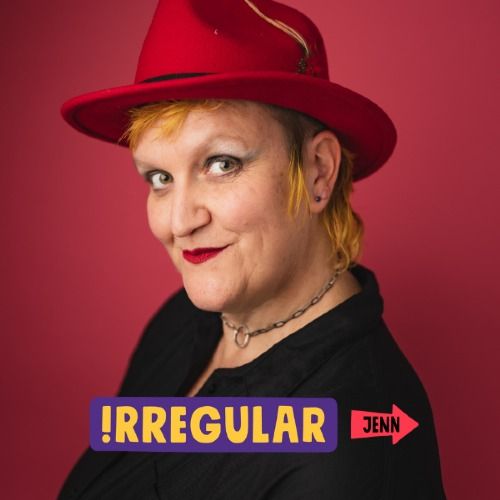
Jenn wilson
"Creating an environment where you feel safe to have difficult conversations—and safe to be yourself—is the foundation of every healthy relationship." – Maria Line
Jenn Wilson is joined by guest Maria Line
Maria is a Relationship Coach & Advocate for Midlife Passion and Purpose
Episode Overview
In this heartfelt episode, Jenn sits down with relationship coach Maria Line to explore her journey from personal unhappiness to rediscovering joy, authenticity, and purpose. Maria shares how music, emotional healing, and self-love helped her rebuild her life after menopause.
Join Our Mailing List HERE
Subscribe for bonus content HERE
Connect with Maria Line
Free Guide & Newsletter: https://marialine.coach/freeguide
Instagram: https://www.instagram.com/maria.connections/
Facebook: https://www.facebook.com/maria.line.16/
LinkedIn: https://www.linkedin.com/in/maria-line-2b2b37167
About Maria Line:
Maria Line is a Relationship Coach and Public Speaker, who believes midlife should be a time filled with passion, purpose and fun. After years giving her all being a Teacher, Mum, partner, friend and volunteer, Maria realised she had lost who she really was. When menopause knocked her down, she had to rebuild her life, and learnt to truly love the person she really is. Now, as a Relationship Coach she wants people to find love, starting with themselves, and live a life that lights them up. Maria loves to walk her dog in the countryside; dance at festivals and bake sourdough for her young adult children.
Episode Takeaway
This episode is a celebration of self-discovery, authenticity, and radical honesty. Maria reminds us that love begins with self-acceptance and that relationships thrive when built on consent, communication, and joy. Her reflections on alternative relationship models and emotional healing offer a refreshing perspective on how to live a life that truly lights you up.
Further Resources: links to offers from Irregular that are relevant to the episode
More about this episode:
Maria’s Journey: From feeling trapped and unhappy to becoming a midlife relationship coach.
The Power of Self-Discovery: How reconnecting with passions like music helped her rebuild her life.
Breaking Free from “Shoulds”: Why societal expectations often bury our authentic selves.
Midlife Relationship Challenges: Why priorities shift and how to navigate them.
Consent and Communication: Creating safe spaces for honest conversations in all relationships.
Emotional Resilience: Tools for processing emotions and avoiding getting stuck in them.
Body Awareness Practices: How tuning into physical sensations can transform habits and healing.
Boundaries and Permission: Giving yourself the freedom to rewrite your relationship rulebook.
Practical Tips: From prioritizing joy to managing triggers and building trust.
Want to hear more?
Subscribe now for After Hours Bonus Content- click here
Or join The Irregular Membership and get Jenn’s support to start your own personal rebellion.
Season 1 Episode 22
Transcript
Transcript
Start Time::End Time: 00:32:07.950
Jenn Wilson: Hi everyone and welcome to today's episode of the irregular humans podcast with me. Jenn, Wilson, today, my guest is Maria line and Maria is a wonderful relationship coach. And she's a relationship coach who's come to being that partly through her own lived experience and works a lot with people
Jenn Wilson: who are in a midlife stage, and their relationships of all kinds are going through changes and reshaping and
Jenn Wilson: irregularness. So Maria, welcome.
Maria Line (she/her): Hi! Thanks for having me.
Jenn Wilson: Oh, my pleasure, and tell us a bit about you and and your relationship coaching. Tell us a bit about what you do and how you came to that.
Maria Line (she/her): Well, I came to it because I needed it so about 10 years ago I
Maria Line (she/her): found myself incredibly unhappy, and anybody who could see me at the time, probably wouldn't have seen that, because I was very good at pretending to be happy, and I thought that would lead to
Maria Line (she/her): a life that felt good. I had children, and they were lovely, and I
Maria Line (she/her): and I had a nice house. I was married. I had a good job.
Maria Line (she/her): but and I had great friends, but I was really lonely. I just felt really
Maria Line (she/her): trapped, and I didn't know why.
Maria Line (she/her): And that really that realization sort of led to a path
Maria Line (she/her): where I just discovered more and more about
Maria Line (she/her): myself. Ultimately, that wasn't the purpose at the beginning. At the beginning I just wanted to change everything around me, to.
Jenn Wilson: And you know.
Maria Line (she/her): Make things better and make me feel better.
Maria Line (she/her): And yeah, even after my divorce, I wanted somebody who was
Maria Line (she/her): similar, but better than my ex, and that would have been so wrong. That would have been so wrong. I'm really glad that didn't happen.
Jenn Wilson: Oh, there can be that tendency, can't there, when when we experience different relationships, and it doesn't have to be romantic relationships, either. I mean I'm thinking about for me. There's a there's a big gap between my eldest child and my youngest child, and well, and I've only got the 2. There's not lots.
Jenn Wilson: And and that kind of like, oh, right, we're starting again with parenthood. What will I do over, you know, like, what have I learned from last time?
Maria Line (she/her): Oh, yeah.
Jenn Wilson: We shake those mistakes. But actually, sometimes it's
Jenn Wilson: it's a clean slate you need, almost, is it? I don't know where would.
Maria Line (she/her): I think you do. I think you do. And yeah, I mean, certainly with your relationship with children, which I'm really interested in as well, because my older 2 are neurodivergent. They're now adults, and they're both very different. And it's been a challenge. And yeah, you can think you can go. You can do something with one child. Oh, that worked and try it with one of your others. And it's I mean, it's like this with all people.
Maria Line (she/her): But I think ultimately what it all comes down to. And this is children, romantic relationships and and work relationships. Friendships is
Maria Line (she/her): creating an environment in your life where you feel safe to have difficult conversations, and you
Maria Line (she/her): you feel safe to be yourself.
Maria Line (she/her): And looking back at that unhappy woman 10 or so years ago, I
Maria Line (she/her): was not being myself. I had taken
Maria Line (she/her): one move after the other, tiny moves over the decades in my life so far, and it had strayed so far from being who I really was that I buried myself deep inside. That's how I picture it. It was almost like I'd locked myself away. And you know. I question now why I did that, but I think it was all of those messages I got from
Maria Line (she/her): ultimately. I think originally my parents about being too much or too loud or not serious enough, or not focusing on the things that are important, and then were reinforced by other decisions. I took in life about where I went, who I spent my time with.
Maria Line (she/her): and I don't know. You're a similar age to me. But back in the eighties, if you were going to try and like, get on. There was lots of self-help stuff emerging. It was in book form then, of course, and most of it was about copying successful people, usually successful men, or being the ultimate. Do it all. You know, woman
Maria Line (she/her): who could run a tidy home and and and have a job, and I knew I didn't. I didn't really want that. But I
Maria Line (she/her): I felt I should be capable of those things. And that's a horrible word, should isn't it? Because it just comes with so many expectations. And
Maria Line (she/her): and I so I had, you know, made little changes in routine, and lots of them have been successful. They had got me things in life, but ultimately
Maria Line (she/her): what I was doing was burying the real me.
Jenn Wilson: Hmm! And how.
Maria Line (she/her): Hiding the real me behind this mask of mom and teacher. And yeah.
Jenn Wilson: Thing, isn't it? It's like the one of the things I I talk about a lot with my clients, and and you'll know this framework. Well, work together is the is the concentric circles of consent. You know the layers by, you know the permission. You give yourself
Jenn Wilson: interpersonal interaction, the group dynamic. And then this systemic cultural
Jenn Wilson: set of beliefs, and how all of those are kind of a smoosh together. And so our permission that we give ourselves is mired in all those I should that have created.
Maria Line (she/her): Yeah, yeah.
Jenn Wilson: Them, aren't they? By that cultural expectations.
Maria Line (she/her): To.
Jenn Wilson: That stuff. Yeah, yeah.
Maria Line (she/her): And I'm eternally grateful because I had some friends that are still really close friends that could see through my mask. They could see the real me underneath, and I'm really happy because they've been my cheerleaders all the way through, and they've been there when I've needed them, and I think they saw the real me before I saw it.
Jenn Wilson: Yeah.
Maria Line (she/her): But I didn't know all that. I didn't know. That was the path I was going on when I just made that decision that I wanted things to change. I really didn't know it was about me. As I say, I thought it was about the stuff going on around me, and that's where I concentrated to start with. So I made lots of tweaks.
Maria Line (she/her): I went through marriage counselling, and you know lots and lots of talk about whether this relationship was going to work, and ultimately I couldn't see that it was, and I called time on it.
Maria Line (she/her): I looked at my job.
Maria Line (she/her): I looked at my friendships, I looked at what I was doing, and and the thing that started to
Maria Line (she/her): reignite a bit of a fire inside me fire that I hadn't felt for decades really was reconnecting with my teenage passions and purpose, and I got back into music. I love music, I love live music, the thrill of discovering a new band or a band that's been around a while that I haven't come across and diving into their back catalogue. I love that. So I started to do more of that, and that was
Maria Line (she/her): that was giving me the energy to go further. Really.
Maria Line (she/her): yeah. And I've got scroll forward about
Maria Line (she/her): 7 years or so further on than that. And I was in a better place. I'd managed to move house with the help of a coach. Actually, and I'd managed I was feeling a lot better.
Maria Line (she/her): But and I was in a relationship.
Maria Line (she/her): But
Maria Line (she/her): in my relationship. I was not the 55 year old woman that I was on the outside at the time.
Maria Line (she/her): I was still a 14 year old girl who.
Jenn Wilson: Have.
Maria Line (she/her): Was feeling was trying, was ignoring, I suppose. Red flags we call them now, don't we? I was ignoring warning signs. I was hoping for the best
Maria Line (she/her): I was.
Maria Line (she/her): and and then ultimately he caught time on it, and I was devastated, and I could just feel that
Maria Line (she/her): wronged 14 year old, who was angry and upset, and and I wanted to do all these. You know I wanted. I was awful, you know. I was doing the long text messages and the slacking them off to other people and and all and all sorts of things, and and I was probably taking a lot of it out on my children as well, which was not good. And
Maria Line (she/her): I thought, this is stupid. You've got so much you've sorted out in the rest of your life. And yet in relationships, you're still acting like you did when you know when Gary finished with you outside the chemistry lab, you know, it was like.
Jenn Wilson: Yeah, yeah, and that. So that getting in touch with that sort of younger self that had opened up loads for you, it also kind of put you back there in terms of your emotional connection.
Maria Line (she/her): Yeah.
Jenn Wilson: People.
Maria Line (she/her): Well, do you know what, Jen? I think I had never moved on from there?
Maria Line (she/her): Right?
Maria Line (she/her): Still, I think relationships is the the time and the place when we
Maria Line (she/her): want to be ourselves. Of course we do. We want to relax. We want it to feel like coming home.
Maria Line (she/her): And yet
Maria Line (she/her): we put a lot of burden on. I think we sold this thing, Disney Pre Disney love stories, you know, Jane Austen, whatever it should be easy.
Maria Line (she/her): it should be easy. We should just feel like we can just relax, be ourselves, and the other person will love us for it, and you know, and they'll read our minds. They'll know what we need to do.
Jenn Wilson: All of those, all of those stories end up. They fell in love and lived happily ever after, don't they? You don't get the stories of. They fell in love and started a life together. And it's difficult.
Maria Line (she/her): And it was been nice.
Jenn Wilson: Love it.
Maria Line (she/her): So I'm not made her feel resentful.
Maria Line (she/her): Yeah.
Jenn Wilson: Yeah, so yeah, what happens after that like, because I can really relate to that. Actually, I mean.
Jenn Wilson: I'm no longer. I no longer practice monogamy. I'm now now practice ethical non monogamy, because in my questioning of the standard script of relationships.
Maria Line (she/her): Yeah.
Jenn Wilson: I decided to take it apart completely and say, actually, monogamy is also a sort of socially constructed.
Jenn Wilson: How.
Maria Line (she/her): Yeah.
Jenn Wilson: Things, and that's not to say that there's anything wrong with that. But.
Maria Line (she/her): Yeah.
Jenn Wilson: To make it a conscious choice for.
Maria Line (she/her): Yeah.
Jenn Wilson: One involved and go. Is that what we want? And what do we mean by monogamy? Do we mean sexual monogamy, romantic monogamy? Do we mean, you're the only person that matters in my world.
Maria Line (she/her): Yeah.
Jenn Wilson: I had when I got very involved with one of my partners, who's polyamorous. One of my best friends said to me, So is, is Chris the most important relationship you're in right now. And I said.
Maria Line (she/her): No, that is a hierarchy. Yeah.
Jenn Wilson: Well, also, that's hierarchy and romance, but also no mate. You and me have been mates for like 30 years.
Jenn Wilson: Yeah, yeah.
Jenn Wilson: Suddenly, more important.
Maria Line (she/her): Yeah.
Jenn Wilson: And my kids and my parents and my work colleagues and everyone, just because.
Maria Line (she/her): Exactly.
Jenn Wilson: Romantic relationship. So it's not just the hierarchy in the, in the within, the sort of romantic partners that ethical non-monogamy often.
Maria Line (she/her): Yeah.
Jenn Wilson: It's also, why is romance the.
Maria Line (she/her): Yeah.
Jenn Wilson: Thing that we PIN our.
Maria Line (she/her): Yeah. Why do we put it on a pedestal? Yes, we do.
Jenn Wilson: Expect that one person to fulfi.
Maria Line (she/her): Yeah.
Jenn Wilson: So many needs in a.
Maria Line (she/her): Yeah, yeah, absolutely. So I find ethical non-monogamy
Maria Line (she/her): fascinating. It's like, I don't practice it. And it's really to be honest, it's it's not. It's not conscious choice. Actually, if I if I I think my partner would be open to that, if that's what either of us wanted to do. But we're quite happy with how we are at the moment. Yeah.
Jenn Wilson: There is a sort of like who's got time for that.
Maria Line (she/her): People. I've talked to that practice. I can't say it. That's the thing that comes up all the time. They just don't have.
Jenn Wilson: Fabulous scheduling is the enemy of the non-monogamous. Yes.
Maria Line (she/her): But it is the ultimate
Maria Line (she/her): consensual the PIN, the the gold standard of communication, of choice, of of thinking about what you want in a relationship of creating safety, of
Maria Line (she/her): of examining what it is that you like. It's the ultimate gold standard for all of that. It has to be otherwise. It just becomes, you know, deceitful, you know to yourself as well as everybody else, and I absolutely love that you really have to practice and develop all of those skills to make it work.
Jenn Wilson: For it to be truly ethical and consensual. Yeah.
Jenn Wilson: I think there are lots of people who practice forms of ethical non monogamy that don't explore all of that meaning in the same way.
Maria Line (she/her): Yeah.
Jenn Wilson: I mean, you've experienced in your own relationships that there's.
Maria Line (she/her): So boundaries is the other thing I should add to that list, isn't there? You have to be quite boundaries, and have your own rules and policies about walking away from people when they make you feel
Maria Line (she/her): well, when you, when you sense that there's something not right there. Yes, yeah.
Jenn Wilson: And this idea, you know, in your Disney scenario that love is enough.
Maria Line (she/her): Hmm.
Jenn Wilson: That's all we need. Yes, love is all we need in the broad sense of love you know of, you know human kindness and abundant love, but in terms of the romantic relationship. Love's an important ingredient, but a lot of it's.
Maria Line (she/her): Yeah.
Jenn Wilson: About those decisions and choices, isn't it?
Maria Line (she/her): It is about those decisions and choices. So I sought help
Maria Line (she/her): and the help that I found I came across somebody who was recommended. I did a deep dive online, you know, as you do, checked her out, followed her videos, quite liked her.
Maria Line (she/her): What I did, you know. I felt I related to her. She was a similar age to me, so excuse me, and
Maria Line (she/her): I am.
Maria Line (she/her): I started working with her, and what I didn't know how she worked, but within the 1st
Maria Line (she/her): session, in fact, the sort of the the chat beforehand session she took me into
Maria Line (she/her): just sitting and breathing and
Maria Line (she/her): looking internally and not looking at a particular story, but just
Maria Line (she/her): noticing sensations, and noticing where good feelings and feelings that may
Maria Line (she/her): feel a bit weird, uncomfortable. Whatever were coming up in my body, and you know I think I'm Adhd. My children are Adhd, and I'm pretty sure I am.
Maria Line (she/her): And for me that
Maria Line (she/her): just was like opening a door. It just suddenly there was pain that was being lifted. I was in a state of heartbreak at the time, and it was just like instant relief. And I've done talking therapist before, and I can talk for England. I love it, you know I'm in that room. I'm just talking about myself. It's absolutely fantastic, but I don't find they made much difference to me, but once I started to look inside
Maria Line (she/her): and notice what's going on in my body.
Maria Line (she/her): It was like
Maria Line (she/her): all I was developing the power and the knowledge to change habits that I never could do through just thinking about it and talking about it in my head. It was. It was amazing, and I found it so amazing that I decided that I was going to take the course that she took.
Maria Line (she/her): which was the vetus sex love and Relationships course, an American course, a very extensive course. And so I signed up to that I've been a teacher for 30 years. I'm still working in schools a couple of days a week. I specialize in autism, and I absolutely love working with autistic teenagers. But
Maria Line (she/her): for me I wanted to do that, and one of the other things that made me want to take the course
Maria Line (she/her): I was weighing up, and I had always been good. A good listener had always been the friend that people come to and ask for advice, and I knew I wanted to go in that kind of area somewhere. But I had some really good friends around for dinner, and you know they're fantastic women. They're similar age to me. They've had really successful lives, you know, once an international mountain leader, a couple of doctors.
Maria Line (she/her): And we sat there and we talked about men or actually no, we didn't talk about men, because it wasn't that. It was a mixed crowd. We talked about relationships.
Jenn Wilson: Okay.
Maria Line (she/her): And I just thought we could be 14 year old, you know, 14 year olds talking about relationships. But
Maria Line (she/her): it yeah, it was crazy. I just thought, this is silly. Look at us. We're really successful women. We all live independent lives.
Maria Line (she/her): Here. We are talking about relationships because they are important. And they do. If you if you haven't got one, it can lead a big hole in your life. And so I thought, Yeah.
Maria Line (she/her): we need help. We need really need help with this. And I, there are quite a lot of relationship coaches who are
Maria Line (she/her)::Maria Line (she/her): and any kind of different is fine. You can rewrite the rule book. But I'm partly what I'm doing with people is giving them permission to actually explore that and do that and say, that's okay.
Jenn Wilson: Hmm, yeah, that permission piece is so important. It's big.
Maria Line (she/her): Problem.
Jenn Wilson: My work, as you know of of. It's amazing when people do sort of sit with.
Jenn Wilson: you know, just asking sometimes a question.
Maria Line (she/her): Hmm.
Jenn Wilson: Oh.
Jenn Wilson: and and and why does it have to be that way, or you know, what assumption are you making there, or.
Maria Line (she/her): Yeah.
Jenn Wilson: Is there a story that you're telling yourself? You know, a simple question like that can in the right moment in the right, held space with a
Jenn Wilson: really be a transformative question.
Jenn Wilson: Where you suddenly go. Oh, hang on a minute. I'm following a script here I'm following a socially sanctioned this is the way you're supposed to do it.
Jenn Wilson: Yeah, absolutely.
Jenn Wilson: rather than what I actually want, or what the other person might actually want. Do you know the do you know the wheel of consent. Betty Martin, she said.
Maria Line (she/her): Yes. Yeah.
Jenn Wilson: Having a it's in. I was having a chat with Betty Martin as part of last year's. I do consent festival, and she described
Jenn Wilson: a whole scenario in a relationship when she was younger, where she had mentioned an interest in travel.
Maria Line (she/her): No.
Jenn Wilson: Partner at the time, said, Would you like to go to? I can't remember where she said it was. I think it was somewhere in France. She's American. And and she said, Yeah, you know, kind of like.
Maria Line (she/her): Cool. Yeah.
Maria Line (she/her): Why do you see this.
Jenn Wilson: Coming from.
Jenn Wilson: Off they went to this place together, and they were young and free, and they went. They stayed there for a very long time, you know, like kind.
Maria Line (she/her): Dude.
Jenn Wilson: Travelling, but she didn't really want to be there, and.
Maria Line (she/her): Oh!
Jenn Wilson: The relationship started to sort of fall apart a little bit, and eventually they had a conversation where she went. I don't know what we're doing in. Let's say it was Paris. It wasn't Paris, what we're doing in Paris, you know. I came here because you wanted to come here, and he said, no, I came here because you wanted.
Jenn Wilson: and neither of them wanted to be.
Maria Line (she/her): Yeah, yeah.
Jenn Wilson: Of that deeply ingrained kind of let's please each other.
Jenn Wilson: Assume what the other part we know what the other person.
Maria Line (she/her): Yeah.
Jenn Wilson: Thing, as you said, you know.
Jenn Wilson: ended up in this absurd situation.
Maria Line (she/her): Know, and you know that's 1 of the most. The assumption about what my response is going to be is one of the
Maria Line (she/her): conversations that can be most contentious, or could be most contentious between my partner and I, because often I say
Maria Line (she/her): oh, you haven't mentioned so and so, or me joining you at so and so, and he goes. Well, I didn't think you'd want to go.
Jenn Wilson: Yeah.
Maria Line (she/her): Why, I don't know whether I want to go so how could you possibly know? Let's have a think about it, and it's like I always try. You know, one of the things I've really tried to cultivate is that safe environment.
Maria Line (she/her): to have those conversations, and we are very good at having those conversations now, and better and better, and it's never a done, you know, done and fixed thing. It's always a thing that goes that I'm constantly working on, and I'm constantly having to live the life that I'm working on with other people.
Maria Line (she/her): Hmm, I and you know I have to make sure that
Maria Line (she/her): I don't have to make sure, but if I don't, I notice a difference in my own well-being? I want. I like to live my life with passion and purpose. So I prioritize the things that I enjoy doing, and sometimes that means
Maria Line (she/her): saying no to other people more. Even my children, you know, because I need to prioritize and make time for the things that light me up. Because they are my food, my medicine. They're what. Give me my strength and my resilience and make life worth living, and I practice lots of stuff which is good for myself.
Maria Line (she/her): and that really most of those things are bringing myself into the moment. So beyond the basics, which are really important even in relationships of enough water, good food, all of those get enough sleep. It's also the I love being in nature, and I try and get out in nature every day, and I try. I like nothing more than standing up the top of a mountain and looking at the view. But what I've practiced
Maria Line (she/her): is looking at the individual leaves and flowers, because that brings me right back to write the here and now, and it invokes that curiosity in me, and that
Maria Line (she/her): is that sort of expands my own horizons, I suppose, and and
Maria Line (she/her): helps rewire my central nervous system and
Maria Line (she/her): and then it's having a toolkit of stuff to help me process emotions. So I know I mean, there's so much shit that, you know, hits the fan, especially when you have a network of people that you're responsible for in some way, be it. You know, children, parents work whatever. If things are going to happen. You're not going to be able to create an environment where they don't.
Maria Line (she/her): but what you don't. It is great. If you're not scared. You know that you can't, that things are going to make you angry. They're going to make you sad. They're going to make you resentful, but it's not getting stuck in that emotion. It's feeling it because it's it's there for a reason. But then, being able to process it, and the more times you can practice that, and then let it go and move on from it, and know that that's in your power, and you've.
Jenn Wilson: Oh, it's fine!
Maria Line (she/her): To do that. The more you can have those difficult conversations you can. You can connect much closer with people because you're not scared of what might come up.
Jenn Wilson: Yeah, yeah, it's prioritizing that truth and honesty and collect and opens above
Jenn Wilson: the convenience of a yeah, alright, let's go along with each other kind of way of being, isn't it?
Maria Line (she/her): Yeah. So when I was about 3 weeks into my current relationship. So I met him.
Maria Line (she/her): I just current relationship, didn't I? Because because for us every day it's a choice to see each other, and tomorrow we might choose differently, and we'll have a conversation about it. But I met him at a music festival. I wasn't looking to date. He wasn't looking to date, but we got on really well. And
Maria Line (she/her): I said, Let's exchange phone numbers and see what happens. And 2 years later, you know, we're still seeing each other. I'm off to meet him in France tomorrow. Hopefully we won't have a conversation and say, Why are we both here? But anyway, I was about 3 weeks into this relationship, and his Whatsapps fell off a cliff.
Maria Line (she/her): Absolutely nothing, you know there was like
Maria Line (she/her): 2 or 3 messages from me. Nothing from him blew 2 blue ticks.
Maria Line (she/her): and it got, and there was my 14 year old girl, you know, I thought I dealt with, and she was going. Oh, God, no, this isn't going to work. Just call it a day. And then she's going well, actually, you could just send more messages and get his attention. Perhaps you know, say something. I tell him that this isn't good enough, and I just thought.
Maria Line (she/her): no, there are a million reasons why he could not answer those, and so I sat tight. I had more time in nature. I looked after myself, I called friends. I did things for myself, for my own central nervous system, and to look after my 14 year old inside.
Maria Line (she/her): and Sunday night came, and he. He phoned me, and I said, Oh, Hi! How are you? And he and he said, Oh, great! So I've had a really busy week. Work was really interesting this week, and then I've had my daughter and her girlfriend visit at the weekend, and we've had a lovely time. It's been really busy. Oh, great, and I said, I've got something to tell you, and it's a bit difficult.
Maria Line (she/her): and it's not really about you, because I know you didn't intend this, but I've been feeling really awful this week, and it's because and I explained about the Whatsapp messages.
Maria Line (she/her): and I never would have done that before.
Jenn Wilson: I'm.
Maria Line (she/her): Just because once he'd phoned me, even if I'd sat on it once he'd phone me. I just thought, Oh, it's all right now, and I'd have let it stew, and until it built up to be a huge thing, you know, because it would happen again. And he was mortified, and he was so apologetic, and he said, I just, he said, I don't really do Whatsapp very much. You know, I'm not really. I'm a phone person, but it's been really busy, and I just didn't occur to me. And now we have a bit of a we have an agreement about just.
Jenn Wilson: Sending a you know, we've got a personalized emoji or something like that. It doesn't always work. It's not always perfect.
Jenn Wilson: I've had that arrangement, where we just send a full stop to each other, which.
Maria Line (she/her): He's a.
Jenn Wilson: Thinking about you, and I want you to know that I don't want to start a conversation right.
Maria Line (she/her): Yeah, yeah, exactly. Yeah. And it's just having those conversations. And then it's building that trust that because that behavior is happening. And that may have been the behavior you've seen from somebody in the past, a partner in the past, and that has been assigned that they're not interested in you doesn't mean that's the case this time.
Jenn Wilson: Yeah.
Maria Line (she/her): Oh!
Jenn Wilson: Imagine.
Maria Line (she/her): Yeah, I know it's so. It's so obvious, isn't it? And yet our body is telling us other things. You know, it's said it's sending alarm systems. And it's it's being in tune with that whole
Maria Line (she/her): body thing again. You know that that what's what is this throwing up.
Jenn Wilson: Yeah.
Maria Line (she/her): Inside of me, and how can I? How can I ease that feeling?
Jenn Wilson: Yeah.
Jenn Wilson: So I it's been brilliant talking about all of this, and I could talk on about it for hours. It's a you know. It's a geeky subject of mine talking about consent and relationships. Communication.
Jenn Wilson: But we're gonna wrap up for too long so that we can
Maria Line (she/her): Haven't even started talking about sex. Can we do that on a different day?
Jenn Wilson: Yeah, we can have another. We can do another. We can do another after hours after dark. One, maybe
Maria Line (she/her): Do you have.
Jenn Wilson: I did have a whole conversation with with another podcast guest that's going to be an 18 plus one. So there might be a side a side pod quest. But
Jenn Wilson: If you were gonna just as a sort of leaving thing, if you were going to suggest one thing that might help people to give themselves permission. As you said.
Jenn Wilson: What, what one thing might you sort of recommend to someone who's struggling with that.
Jenn Wilson: Struggling with one now. So I'm gonna make it an A and a B.
Jenn Wilson: You can break the rules. We're irregular. You don't have to give.
Maria Line (she/her): Prioritize something
Maria Line (she/her): that you've wanted to do, and I just say, wanted to do it could be something that gives you great pleasure. It could be something that is a challenge to you, but something you've been thinking about and haven't done. Prioritize it. Diarise it this week. And then, when it happens.
Maria Line (she/her): Be curious about how that makes your body feel.
Maria Line (she/her): Whether there is lightness, heaviness, darkness, sparkling prickliness, softness in different places.
Maria Line (she/her): Yeah, yeah, that's a great. That's a great exercise. Might try it myself, even though I'm quite practiced at this. It's really is a practice, isn't it something?
Maria Line (she/her): Yeah, yeah.
Jenn Wilson: Like, you know, like a lot of us. I tend to live in my head rather than in my.
Maria Line (she/her): Yeah.
Jenn Wilson: Feelings in my body, and so.
Maria Line (she/her): Yeah.
Jenn Wilson: Yeah, that's a great exercise.
Jenn Wilson: So yeah, something that you want to do. Do the thing and notice how that feels in your body.
Jenn Wilson: Hmm, hmm, fantastic. Yeah, yeah.
Jenn Wilson: thank you, Maria. It's been brilliant chatting today. And if people want to find out more about you and your work on relationships and.
Maria Line (she/her): Dude.
Jenn Wilson: Bit of more of your world. Where can they find you?
Maria Line (she/her): I'm on Instagram, Maria dot connections, and I'm on Facebook.
Maria Line (she/her): and particularly if anybody in your life or yourself have ovaries and your midlife. You may be finding your body, and your mind is very influenced by menopause and depleting Oestrogen. And so I have a free guide which you're going to put the link in for, aren't you.
Jenn Wilson: Do that? Yeah.
Maria Line (she/her): You can download that and sign up to my newsletter, and you'll find more about me. And yeah, my family where I live. My dog all of that kind of stuff and my relationships, and how I make them work.
Jenn Wilson: Thank you, Maria. It's always a pleasure to chat to you. Thanks for being on the podcast. With me. Thank you.
Maria Line (she/her): I loved it. Thanks very much.