Episode 2
The power of being YOU - guest Amy Butterworth
The power of being YOU - guest Amy Butterworth
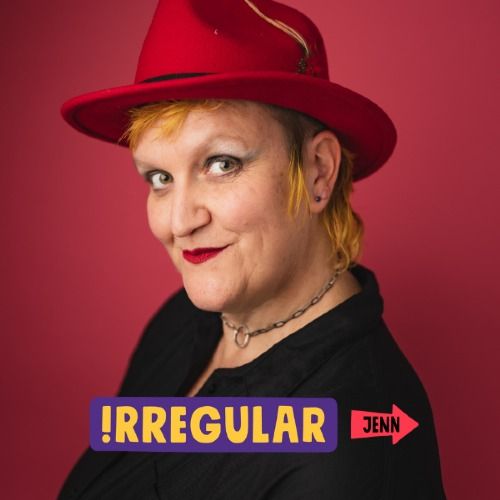
Jenn wilson
“We need you rested, and we need you weird.” – Amy Butterworth
Jenn Wilson is joined by our guest: Amy Butterworth (she/her) – Long Covid Rock Star, DEI Consultant, Advocate for Disability and Inclusion
Episode Overview
In conversation with Jenn, Amy shares her journey through disability, long Covid, and identity, offering insights into activism, inclusion, and the radical act of self-care.
Join Our Mailing List HERE
Subscribe for bonus content HERE
Connect with Amy
LinkedIn: @LongCovidRockStar Instagram: @longcovidrockstar
TikTok: @longcovidrockstar
About Amy:
Amy is an Equity, Diversity and Inclusion Consultant and disability activist living with long covid. Her background in comedy, youth coaching, psychodynamic consulting and inclusive programme-design means that she's always been a vocal ally, but now she speaks from lived experience. She learned long ago that she's irregular in every room, and that is why - and how - she gets things done.
Episode Takeaway
This episode is a celebration of difference, a challenge to societal norms, and a call to embrace the full spectrum of human experience. Whether you're disabled, neurodivergent, queer, or simply feeling out of place, Amy’s message is clear: your presence matters, and your weirdness is welcome.
Further Resources: links to offers from Irregular that are relevant to the episode
More about this episode:
- Disability & Identity: Amy discusses how long Covid transformed her life and perspective, and how disability can be a source of power and style.
- Belonging & Otherness: From passing privilege to invisible identities, Amy reflects on navigating spaces where she both belongs and doesn’t.
- Activism & Advocacy: The importance of showing up as your “most self” rather than your “best self,” and how activism must include rest, weirdness, and authenticity.
- Curiosity & Consent: Jenn and Amy explore how curiosity without judgment can foster allyship and deeper understanding across differences.
- Systemic Barriers: A candid look at capitalism, access, and how societal structures exclude disabled and marginalized people.
- Grace vs Ego: Amy introduces her sketch series where she dialogues with her inner Grace and Ego, unpacking daily dilemmas with humour and wisdom.
Want to hear more?
Subscribe now for After Hours Bonus Content- click here
Or join The Irregular Membership and get Jenn’s support to start your own personal rebellion.
Season 1 Episode 2
Transcript
00:00
Jenn Wilson: Hi everyone and welcome to this episode of the Irregular Humans podcast with me, Jenn Wilson, my guest, today is Amy Butterworth, and the reason that I asked Amy to join the Irregular Humans podcast is because I saw them talking at a networking business event called the Big Festoon and they spoke so amazingly about their experience as an advocate for people with disabilities and long term challenges, without getting into kind of angry disability. Angsty stuff. And do you know what they walked on at this event? Everyone has walk on stage music. Amy's was the boys want to be her. The girls want to be her by peaches, and that said everything that I wanted to know about who this human was that I was going to speak to. So, if you know that piece of music. You'll know why I want to speak to Amy today.
Jenn Wilson: Hi, Amy.
Amy Butterworth (she/her): Hi Jenn.
Jenn Wilson: You're regretting the thing where you said. Oh, just introduce me! As, however, you want to introduce me now, aren't you?
Amy Butterworth (she/her): No, it's that would be my favourite introduction ever. You were the only person who spoke to me afterwards at that event, clocking that track. There is something I think it's about being in your forties to be honest, but there's something about vindicating the uncool teenager by going? What would be the most audacious way to very slowly walk up a ramp.
Jenn Wilson: Yeah.
Amy Butterworth (she/her): On a stage. Then the great is one of the greatest opening to any punk rock tracks, and I was like down now with leather trousers. I was wearing leather trousers.
Jenn Wilson: You were, you looked so rock and roll.
Amy Butterworth (she/her): Deliberate.
Jenn Wilson: Yeah, this human makes being having disability look so cool. And I do want to be her.
Amy Butterworth (she/her): Appreciate that so much. We did say afterwards that there should be a non-binary if, like the boys want to be, the girls want to be her. The NB's wanna be.
Jenn Wilson: Yeah.
Amy Butterworth (she/her): But there is something like a weird byproduct of having long Covid. Is that it kind of forces you in a way to from afar, anyway, to do and look like the things that look cool like walk really slowly and have a skull topped walking stick and take my time with things, and I cannot rush. It's simply no longer possible. So, forcing myself to walk very slowly is an act of energy, conservation, self-preservation, and safety. So I I have to swagger. It's a it's an unavoidable choice.
Jenn Wilson: and do you know what it's that says so much about what I mean when I say, being Irregular, it is in embracing these difficulties, challenges others, othernesses that the normal in inverted commas world wants to say are, you know, terrible. Either things that are wrong or things that should be pitied and this is who I am, and I'm going to just be me. And that is a sort of political act in itself.
Amy Butterworth (she/her): Absolutely was exactly what Audre Lord said. Self-care is an act of political warfare. And the normal was invented in order to judge others, and to decide who was in and who was out.
Jenn Wilson: Hmm.
s about getting long covid in:Jenn Wilson: Hmm.
Amy Butterworth (she/her): Because they've been told what the membership costs. And you asked me before, like, where have you felt irregular and like what groups and things, and I'm a white presenting woman. Highly educated. I sound like a nice girl got dimples and things like that. So I get into rooms because I pass various different ways. I hold many othernesses that are invisible my sexuality, my disabilities, and my race as well. And so, what's interesting is understanding those privileges that you hold, what rooms you get into and what rooms you're not allowed into based on exactly the same things. So I'm able to go into this room because I'm highly educated and I'm white passing. But I can't get into that room because I'm a woman. I'm not welcome in that one, because I'm Jewish, but I'm also not allowed to go into that one, because I'm only half Jewish and so all of these, and I'm you know, only bisexual. So there's all of these things where, like well, which one am I allowed to be in, and there's imposter syndrome, you know, 14 fold but it means that you get to sit back and go. What does it mean to be a member of this group? And even in my work life. I was always the one who wasn't. So. I was a violinist on the comedy circuit. I was an actor in orchestras, and I was a comedian in plays. I wasn't part of any of those groups and I figured that out pretty quickly, and I understood that. And in the same way that I was, you know, the the Gentile at my cousin's bar Mitzvahs. But I was the Jew at my very white Christian university, so I realized, oh, none of this matters don't none of it matters. What I can do is bring a different perspective and that my difference is the difference.
Amy Butterworth (she/her): And so I brought a musicality to comedy. I brought a performance to my music career. I brought a comedic timing to plays that I was in. This is before I went into youth work and inclusive program design. And I remember there was an amazing experience. I was in a production of 12th Night and I was festa the fool, and played the violin, and everyone else on the cast had been to Drama school I had not, and I was a comedian at the time, playing the violin and festa opens the show and a friend of mine, who has been a fantastic friend ever since.
Amy Butterworth (she/her): said to me afterwards, like we didn't.
Amy Butterworth (she/her): We didn't get you in rehearsals. We didn't really understand like where you were at.
Jenn Wilson: Hmm.
Amy Butterworth (she/her): Why are you here?
Amy Butterworth (she/her): Probably because I was feeling pretty insecure in rehearsals. I don't belong here. I'm not an actor, and things like that.
Jenn Wilson: Hmm.
Amy Butterworth (she/her): But on the opening night, when I opened the show
Amy Butterworth (she/her): they said we were all watching you, and we finally got it, because the clown
Amy Butterworth (she/her): doesn't exist without an audience.
Jenn Wilson: Hmm.
Amy Butterworth (she/her): They only ever perform , % because they're fed by laughter, and
Amy Butterworth (she/her): they can't see my magic until there's people to play with, and
Amy Butterworth (she/her): that stuck with me, and and they said it so kindly and so like
Amy Butterworth (she/her): we got it. We judged you. We understood what your gift was after that, and then and then on stage. It was all really fun to play. So like we, we get you. Now we trust you. We see that you can hold the audience in a way that an actor
Amy Butterworth (she/her): isn't trained to or isn't interested in, because clowns live off that laughter.
Amy Butterworth (she/her): So, understanding
Amy Butterworth (she/her): that and just going through all of my work like. After that I ran a 6th form in a school. I was not a teacher. I
Amy Butterworth (she/her): worked in managing a grant. I'd never managed a grant before. I
Amy Butterworth (she/her): was the manager of the program design of the scouts. I'd never been a scout.
Amy Butterworth (she/her): but what I bring is my own lived experience, a different
Amy Butterworth (she/her): perspective of what young people need, what society needs, an unwavering passion
Amy Butterworth (she/her): and a belief that I am unshakably right
Amy Butterworth (she/her): about the fact that all young people
Amy Butterworth (she/her): deserve access to the same things that I did.
Jenn Wilson: Hmm.
Amy Butterworth (she/her): I'm unshakably right about this at any room. There's no.
Amy Butterworth (she/her): you can't bring me an argument.
Amy Butterworth (she/her): The hill I will die on, and
Amy Butterworth (she/her): that's what's interesting about being a regular is by forcing you to be at the edge as long as you don't.
Amy Butterworth (she/her): There's a term about fitting in, and the assumption that that's what we have to do, or that's what everyone else is doing.
Jenn Wilson: Yes.
Amy Butterworth (she/her): Right fitting into what? Exactly, who has created this shape.
Amy Butterworth (she/her): and for whose benefit and what I found out over far too long, frankly, is that when I tried to fit in and it wasn't, I wasn't trying to fit into groups. I understood that in a group dynamic that your difference. Matters where I tried to fit in was essentially fitting into other people's expectations of me on personal relationships which kind of manifests as people pleasing right.
Amy Butterworth (she/her): I fit in to your image of me.
Amy Butterworth (she/her): It means I compromise fundamental cause of my own soul. Personality desires, needs.
Amy Butterworth (she/her): and I'm abandoning myself in order to fit into your design.
Jenn Wilson: Hmm.
Amy Butterworth (she/her): And we do that on a group level. We do that on a personal level, because humans desire safety.
Jenn Wilson: Hmm.
Amy Butterworth (she/her): So of course.
Jenn Wilson: Connection to one another.
Amy Butterworth (she/her): And identity and belonging is very important.
Amy Butterworth (she/her): But at what cost.
Amy Butterworth (she/her): and by whose value system are we playing? So at the conference that you and I met one of the things that I left
Amy Butterworth (she/her): the conversation with. So it was a Q. And a. With Danny Wallace.
Amy Butterworth (she/her): the great Stanley Wallace, at the big festoon, and the title of the conversation was How to show up for your community when you can barely sit up. How can you be a disability activist. When you have a disability yourself and like with any activism.
Amy Butterworth (she/her): it's not about winning or losing, because if you win something that implies, there's a loser. And in Socialist communal activism, that's not a great look.
Amy Butterworth (she/her): If there's a loser to your campaign.
Amy Butterworth (she/her): we need to bring everybody with us. But my point was.
Amy Butterworth (she/her): there is no point in me fighting for you. If you aren't being your weirdest self
Amy Butterworth (she/her): as much as you possibly can, not your best self, your most self otherwise, who am I doing this for? And so at the end of it, I said, we need you rested, and we need you. Weird.
Jenn Wilson: Hmm.
Amy Butterworth (she/her): Because
Amy Butterworth (she/her): your difference is absolutely necessary to this movement, to this community, to this group, because your difference is going to empower somebody else's. And we can remind people say, for example, in the disability community.
Amy Butterworth (she/her): that we are of all flavors, all backgrounds, all genders, all sexualities, all capabilities, and
Amy Butterworth (she/her): that is rich, and that is valuable.
Amy Butterworth (she/her): And what was really interesting was.
Amy Butterworth (she/her): I was really touched. There was a lot of people came up to me afterwards and thanked me
Amy Butterworth (she/her): for being unapologetic.
Amy Butterworth (she/her): Which I thought, and it was an interesting word, and it kept coming up. So I started asking people.
Amy Butterworth (she/her): what would I have to apologize for.
Jenn Wilson: Hmm.
Amy Butterworth (she/her): And
Amy Butterworth (she/her): when somebody tells you something about how they've received you, it's always quite interesting to go. I think this is yours. Can you have that back like, what do you mean?
Amy Butterworth (she/her): And it wasn't an attack, by any means. But it's interesting sort of practice of going. You said that. What do you mean?
Amy Butterworth (she/her): And by me going, what do I have to apologize for?
Amy Butterworth (she/her): They were able to reflect and go. I
Amy Butterworth (she/her): yeah, no, you don't have to apologize, and you don't have to apologize for taking a long time
Amy Butterworth (she/her): to get up that ramp onto the stage because it looked really cool. That was deliberate but also it's like you deserve to take time.
Jenn Wilson: Yeah.
Amy Butterworth (she/her): Capitalism forces us to ignore our bodies
Amy Butterworth (she/her): so that we can. What perform, produce, achieve, to what end?
Amy Butterworth (she/her): Like H. Says, who's that for right, and
Amy Butterworth (she/her): and so like. At the start of that conversation it had risen my heart rate so much
Amy Butterworth (she/her): that before I could answer Danny's 1st question, I said, I'm really sorry. This is very exciting. That walk was a big deal for me. I'm now sat down. Could we please just have deep breaths? And so I said, You can join me if you like, but I was like I can't do anything until I breathe properly, and so I had to stop
Amy Butterworth (she/her): and breathe. I've done that running a training session and giving a lecture. It's going. I now
Amy Butterworth (she/her): cannot continue this, because I see my limit approaching.
Amy Butterworth (she/her): My brain fog is about to descend. My heart rate's very high. I want to not only get to the end of this talk, but I want to be able to do Q. And a afterwards, and then not completely collapse when I'm at home. So I want to
Amy Butterworth (she/her): pause now so I can breathe. We all have lungs. We can do this together.
Amy Butterworth (she/her): and without apology.
Jenn Wilson: Yeah, yeah, so important. And that
Jenn Wilson: I think that asking that question back that thing you were saying about
Jenn Wilson: taking people's questions and offering back a kind of curiosity is, I find myself often in a place where I'm teaching people how to be allies.
Jenn Wilson: allies to queer community allies to neurodivergent community allies to women, allies, to people who are irregular, other in some way. And
Jenn Wilson: there's a lot of there's a lot of kind of
Jenn Wilson: almost virtue signalling. I won't be friends with people who aren't openly pro-trans people, you know. I won't be friends with you anymore. And actually, I don't want them to not be friends with those people anymore.
Jenn Wilson: I want them to
Jenn Wilson: ask those people how they arrived at the opinion that they've got and what it is they understand about trans people that makes them think that way. And those ask those questions rather than tell them they're wrong.
Amy Butterworth (she/her): This kind of discourse is really important right now. And that's why that curiosity is really important, because we just need to sort of scratch the surface. There is a technique where you ask the question, why, times.
Jenn Wilson: Get to the root of it. Yeah. And it's usually.
Amy Butterworth (she/her): I don't know. I'm scared, and all the people who I know are scared of this, so if I'm scared with them, I'm safe.
Amy Butterworth (she/her): And curiosity is a really important one, because it's curiosity without judgment.
Jenn Wilson: Yeah.
Amy Butterworth (she/her): And I do. I'm a Dei consultant
Amy Butterworth (she/her): these days. I've got a master's in psychodynamic consulting, which means that we we understand that people bring their
Amy Butterworth (she/her): emotional lives to the workplace. But it's entirely unconscious. So if you had an issue with your mother, and your manager is a woman of a similar age, and they ask you to deliver a report on Friday, and for some reason it's like you've been asked to do the washing up again, and you hate it so you don't know this. This is entirely unconscious right? These dynamics are going on all the time.
Amy Butterworth (she/her): And what I'm trained in is going on.
Amy Butterworth (she/her): I'm interested in where this is coming from, and
Amy Butterworth (she/her): we make assumptions because we don't have the time or the brainpower to sit and analyze every single aspect of what our brain is confronted with every day. So we make shortcuts. We create schemas right, based on our own experiences. So that's what our unconscious bias is. Right. So if we've only ever seen white, able-bodied male managers.
Amy Butterworth (she/her): we, that's what our brain goes. Okay? So why able-bodied
Amy Butterworth (she/her): that that means that they're a manager or all managers are like this.
Amy Butterworth (she/her): That system, one thinking. That's very quick. It's part of our sort of survival tactic, and
Amy Butterworth (she/her): it's very nice, for our ego means that.
Jenn Wilson: It is kind of confirmation bias that we've seen this before. We don't have to analyze it.
Amy Butterworth (she/her): What we're being confronted with now.
Amy Butterworth (she/her): With being being forced to consider the needs of minorities, for example.
Amy Butterworth (she/her): Oh, God, no wokeness! Really, it's like
Amy Butterworth (she/her): sorry it just it baffles me. It baffles me that this is a bad thing.
Jenn Wilson: Yeah.
Amy Butterworth (she/her): By going. What do you mean? Trans. People exist? What do you mean? Trans. People need to go to the toilet. What do you mean, like the asylum seekers have value that they can add to the country. Yeah.
Amy Butterworth (she/her): We're forced to slow down our thinking.
Amy Butterworth (she/her): which means that we have to accept that we might have been wrong.
Jenn Wilson: Hmm.
Amy Butterworth (she/her): And we don't like that.
Jenn Wilson: Hmm.
Amy Butterworth (she/her): And so when I'm speaking to leaders and organizations.
Amy Butterworth (she/her): I'll often say without attack and without judgment.
Amy Butterworth (she/her): It wasn't possible for me to get here in my wheelchair because there isn't a ramp
Amy Butterworth (she/her): this suggests that you haven't thought about me. And why would you? There's no one. There's no wheelchair user on your team. It's simply fact.
Amy Butterworth (she/her): But you miss out on me rough.
Jenn Wilson: And people like me.
Amy Butterworth (she/her): And people like me have had to solve , problems
Amy Butterworth (she/her): this morning. Yeah, before you have. So it's in your best interest to hire people like me.
Amy Butterworth (she/her): But again, and I think you picked up on this in in
Amy Butterworth (she/her): why you wanted to speak to me options because I wasn't this.
Amy Butterworth (she/her): I don't come at this from a bitter.
Amy Butterworth (she/her): Resentful perspective. I also understand that I'm sort of fresh to the disability community. So you know, maybe
Amy Butterworth (she/her): I'm not as kind of worn down and jaded, but nonetheless.
Amy Butterworth (she/her): Why would you have thought of if you don't know anyone in a wheelchair? Why would you consider including them? There is no reason for you to do this. I'm still learning how to include
Amy Butterworth (she/her): you know, the the deaf community and the visually impaired community and things like my videos on on Instagram and stuff. Because
Amy Butterworth (she/her): I forget to do the video descriptions and how to describe myself and stuff. I I just simply forget.
Jenn Wilson: Hmm.
Amy Butterworth (she/her): Until I'm prompted, or I have to slow down my thinking and go. Not everyone can see this, not everyone can see what my hair color is, or what I look like, and things like that. So
Amy Butterworth (she/her): when you're talking to people
Amy Butterworth (she/her): who don't believe the same thing as you, it doesn't really serve either of you to reject them because of their beliefs. Their belief system has come from somewhere, and it's usually from a place of fear. So by inviting them into a safe space and going. I just want to give you a chance to re-examine where that might have come from.
Amy Butterworth (she/her): and just question it safely.
Amy Butterworth (she/her): And if it's because you, you know, I just need proof that you're a bigot rather than to make the assumption.
Amy Butterworth (she/her): because you both need that proof right?
Jenn Wilson: Yeah, I mean, I would love my work and you don't. I know that you don't know. My work in detail comes from a practice of consent, and when I say consent, what I mean is
Jenn Wilson: the practice of finding a place where everyone involved
Jenn Wilson: or directly impacted by whatever it is we're working on together and consenting around
Jenn Wilson: is comfortable enough and secure enough to continue.
Jenn Wilson: It's a live state of being able to be in connection with each other feeling safe, not necessarily feeling completely % safe or completely, % comfortable, actually about finding spaces where you can be
Jenn Wilson: a little bit afraid and a little bit uncomfortable. And that's okay, because the space is safe enough for that.
Jenn Wilson: Those are the conversations that I think
Jenn Wilson: get beyond saying, well, I'm just waiting to discover that you're a bigot and actually recognizing that our so-called bigot is actually someone who, fundamentally, unless they're a psychopath, cares about the same things we do. They care about their family and the people that they love, and they want to be loved and connect with other people just like like us weirdo lefties do.
Jenn Wilson: They're just coming at it with a whole load of other frames of reference and and agendas and complications around it.
Amy Butterworth (she/her): And I think safe enough is a beautiful way to say it, because
Amy Butterworth (she/her): we have to speak up imperfectly. We have particularly about the causes right now.
Amy Butterworth (she/her): because otherwise you're saying nothing. And right now, with all of the stuff that's happening in various different
Amy Butterworth (she/her): layers of society, that is
Amy Butterworth (she/her): even more concerning, and you start hiding yourself. There is something about
Amy Butterworth (she/her): So I mean about bringing your most self rather than your best self like I I don't know. I just think they're weird, and I don't know any, so they're weird to me. I don't see why I have to care about them completely understandable. Why would you?
Amy Butterworth (she/her): There's no reason for you to we just wanna make sure that when you do
Amy Butterworth (she/her): that you don't have to immediately feel scared
Amy Butterworth (she/her): of whomever was whomever we're speaking about somebody in a wheelchair, or with a facial difference, or in different color to you, or different gender to you or a gender that you don't know yet or don't understand.
Amy Butterworth (she/her): We want to help you feel safe and know that these aren't people to be feared, and you know
Amy Butterworth (she/her): it's fascism's greatest Pr trick to make sure that we're pointing to each other rather than pointing up right.
Jenn Wilson: And that's it.
Jenn Wilson: It's the dehumanizing, isn't it? Really? In the end of
Jenn Wilson: you know of people you know, your disability makes you less human in some way, or your queerness makes you less human in some way, or your
Jenn Wilson: refugee status makes you less human in some way. That actually is where.
Jenn Wilson: if we can actually see oh, your bigotry makes you less human in some way, if we can see each other's humanity, fundamental humanity and connect on that that raw, emotional empathy level.
Jenn Wilson: Then we can find spaces to be together that are uncomfortable and not % secure. But
Jenn Wilson: we're not going. You're wrong.
Jenn Wilson: You're not as good as me. And that word best self and most self. I love that I love that Amy, because for me best, then, is imbued with judgment, isn't it?
Amy Butterworth (she/her): Who's who's best.
Jenn Wilson: Yeah.
Amy Butterworth (she/her): I mean, we're not on a scale. I I thank you for saying that I have a lot of time on my own to try and figure out which language to describe my experience with. So even when people say, like, what kind of day is it today? How are you feeling today. It's not. I'm good or bad, or it's a good day or bad day, because by whose
Amy Butterworth (she/her): I mean by capitalist standards I'm having terrible days for the last years, because I've produced nothing and I've not worked. I've not contributed to the economy. If anything, I've been a drain on it because I live on benefit. What an absolute scrounger.
Amy Butterworth (she/her): or by Eastern philosophy! You know
Amy Butterworth (she/her): there is embrace there is value in a life of stillness. Everything I desire is within me, and I have enough, and I am enough.
Jenn Wilson: So.
Amy Butterworth (she/her): Today I'm tired. I'm really tired. I'm quite grumpy and hopeful, like there's many things that you can be. And
Amy Butterworth (she/her): I think what's interesting about what you say of judged as less human.
Amy Butterworth (she/her): and that you see this a lot in disability, benefit conversation, and who gets access to support is who's
Amy Butterworth (she/her): worthy of it, who's deserving of it?
Amy Butterworth (she/her): And
Amy Butterworth (she/her): we have been taught to be the default is to be suspicious of anybody on benefit, and assume that they are scrounging off the State, because that's what people at the top are doing. The richest get tax avoidance. The Mps all get expenses.
Amy Butterworth (she/her): None of them have ever been means tested.
Amy Butterworth (she/her): Only the poorest people have been means tested. One of the cruelest things I remember
Amy Butterworth (she/her): in the litany of the British Empire was just even down to
Amy Butterworth (she/her): The bedroom tax.
Jenn Wilson: The fact that.
Amy Butterworth (she/her): You can be punished for having more space
Amy Butterworth (she/her): where Cameron gets a whole shed. Everybody who's an Mp. Has a study or a second whole property.
Amy Butterworth (she/her): But the working class who get given a home have to fill in all of the rooms, otherwise they get punished for it. They're not allowed a space to do their homework or yoga practice, or just to sit and make things.
Jenn Wilson: -
Amy Butterworth (she/her): Access to space and peace has become a class issue.
Amy Butterworth (she/her): but always has, and that kind of judgment, that punishment, that my default will be to assume that you are bad.
Amy Butterworth (she/her): The fact that being poor or being disabled is a moral failure
Amy Butterworth (she/her): by sort of colonial standards is astonishingly present today.
Amy Butterworth (she/her): and so one of the things that I've
Amy Butterworth (she/her): chosen to do is use my
Amy Butterworth (she/her): remaining relative privilege of support, access to therapy, unconditional love, which I understand not everybody has not everyone else is believed
Amy Butterworth (she/her): with having a chronic condition, because
Amy Butterworth (she/her): when you look as good as this.
Amy Butterworth (she/her): it's very hard to believe that there's anything wrong with me. It's exhausting. I have to keep coming out as somebody with a disability
Amy Butterworth (she/her): by being able to
Amy Butterworth (she/her): recover and readjust and learn about this, and recognizing that not everybody has access to this going. Okay, whatever I'm learning, I'm going to share. So processes, access to
Amy Butterworth (she/her): disability, even things like mindset shifts that I've had to do that. Not everybody who has a disability has the time, or the wherewithal, or the space or the support to go. Let me just question my existential position in this society now, because they've got kids to pick up, or they've got a work that they still have to go to, even though they're pushing their bodies to
Amy Butterworth (she/her): heartbreaking limits.
Amy Butterworth (she/her): So still trying to make sure that I'm contributing to this community in a way that
Amy Butterworth (she/her): is still healthy doesn't burn me out too much. But
Amy Butterworth (she/her): What else are we doing with this one wild and precious life? But making sure that we're sharing our lessons for those who don't maybe have access to them.
Jenn Wilson: Oh, Amy, so many lessons that you've shared on this conversation so far.
Jenn Wilson: Thank you so much for being part of the irregular humans, podcast you really are the total manifestation of what I mean when I say a regular human. And I'm very grateful for that if people want to find you, and want to find out more about the work that you do or follow and find out, you know. Hear some more of your ideas and wisdom. Where can they find you? Quickly.
Amy Butterworth (she/her): Long Covid Rock Star on Instagram, Tiktok, Linkedin.
Jenn Wilson: Just Google, long Covid, Rock Star. And so far back, right.
Amy Butterworth (she/her): I would prefer you to use Ecosia rather than Google. Ecosia is a
Amy Butterworth (she/her): is a search engine that actively plants trees whenever you do a search and trying very much to phase out like my sort of boycott list is growing. Can't do anything exhausting. But
Amy Butterworth (she/her): yeah, if you look up long Covid Rockstar. I'm there. I make videos about
Amy Butterworth (she/her): either sort of the labyrinthine Sisyphean process of disability admin and try to make it easy and accessible for people. I also have a little sort of sketch series where I speak to the manifestation of my grace and my ego.
Amy Butterworth (she/her): where I'm trying to confront a dilemma that I have, either in my disability or just how I show up each day, and my ego is obsessed with getting more, and what other people believe.
Amy Butterworth (she/her): and what other people think. And my Grace is an ancient old woman who definitely smokes off camera and is like.
Amy Butterworth (she/her): you know, we we don't need to go to the party babies. We are the party like we have enough, and we are enough so that it's a really interesting
Amy Butterworth (she/her): how to create grace in a society that forces us to live in ego.
Amy Butterworth (she/her): And it's just quite an interesting kind of philosophical way to
Amy Butterworth (she/her): question how we might be judging ourselves when we're on our own.
Amy Butterworth (she/her): Yeah, a lot of us are a lot of the time.
Amy Butterworth (she/her): So, learning how to speak kindly to ourselves with grace, forgiveness, and patience is one of the greatest
Amy Butterworth (she/her): lessons I've learned in this, and also requires daily discipline to maintain sanity in this nonsense.
Jenn Wilson: It surely does. Oh, Amy, thank you so much for everything. And
Jenn Wilson: You really are a golden, irregular, human.
Amy Butterworth (she/her): I appreciate you. Thank you so much.