Episode 1
Human First - guest Amelia Stewart
Human First - guest Amelia Stewart
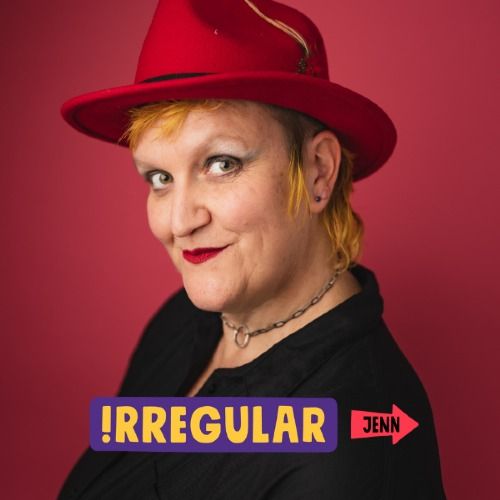
Jenn wilson
"Simplicity comes not from how small you can make it, but how quickly you can do it." — Amelia Stewart
Jenn Wilson is joined by guest Amelia Stewart
Amelia Stewart is a coach who helps neurodivergent business owners build businesses that work with their brains, not against them. Drawing on ecological psychology, lived experience, and a deep understanding of how people make meaning, Amelia supports clients to find visibility strategies rooted in desire, energy, and authentic expression — not hustle culture or neurotypical productivity myths.
Episode Overview
Amelia Stewart reframes executive dysfunction through ecological psychology, focusing on environment-driven action.
Join Our Mailing List HERE
Subscribe for bonus content HERE
Connect with Amelia Stewart
Website Link: https://www.ameliastewart.co/
Social Media links:
Instagram: https://www.instagram.com/simplicity_specialist/
Facebook: https://www.facebook.com/emstewartcoaching/
About Amelia Stewart:
Amelia helps neurodivergent business owners design businesses that work with their brains instead of against them—so action becomes inevitable rather than exhausting. Most advice tells you to get more disciplined. She helps you design your business so doing the right thing stops feeling like pushing a boulder uphill. Because when your environment matches how you actually think, you don’t fight yourself anymore. You just do the do.
Episode Takeaway
Start where want is loudest; progress emerges from visible next steps, not strict linear plans.
Further Resources: links to offers from Irregular that are relevant to the episode
More about this episode:
- Why “just do it” doesn't work.
- Affordances and meaning-making.
- Creating financial oxygen roles.
Want to hear more?
Subscribe now for After Hours Bonus Content- click here
Or join The Irregular Membership and get Jenn’s support to start your own personal rebellion.
Season 2 Episode 1
Transcript
Jenn Wilson: Hi, everyone, and welcome to today's episode of the Irregular Humans Podcast with me, Jen Wilson. My guest today is the wonderful Amelia Stewart. Hi, Amelia.
Amelia (Em): Hello!
Jenn Wilson: And Amelia works with…
Amelia (Em): Neurodivergent business owners.
Jenn Wilson: and helps us, and I'm saying us, because Amelia has helped me, to shape our businesses in ways that work better with our brains.
Jenn Wilson: Tell us more, Amelia, about your irregular approach to all of this.
Amelia (Em): Well, I think…
Amelia (Em): I had a delicious rant with you at the end of the session we did together, which sums it up really well. A lot of the conversations had in the neurodiverse space is very much either
Amelia (Em): it's very much in the deficit way of speaking. In other words, my brain doesn't work the way it should, I have executive dysfunctioning, my brain… my ADHD brain, my ADHD brain, my or… like…
Amelia (Em): And for me, I have always found that quite frustrating, because when we communicate in that way.
Amelia (Em): And when we use the terms given to us by the medical model.
Amelia (Em): What the hell do we do with that?
Amelia (Em): When you say, oh, well, I have executive dysfunction, okay, what do I do?
Amelia (Em): work around it. I'm like…
Amelia (Em): How? How do we work around something that we don't understand?
Jenn Wilson: Yeah.
Amelia (Em): Well, our central executive doesn't work properly. Okay, what does that mean? What is a central executive? I don't know, it's just my brain.
Amelia (Em): Okay, cool. So I went a little bit nerdy and started reading the papers, and trying to figure out what it actually means. Because, yes, I am neurodiverse, yes, I am queer, yes, I am this, I have all these labels, but the labels are categorizations, they're designed to help people
Amelia (Em): Connect with me quickly and easily.
Amelia (Em): They don't sum up how I do the thing I want to do. They can't describe how I can actually do the thing, because at the end of the day, all I'm doing is trying to get things done.
Amelia (Em): Yeah. I'm trying to move my way through this world and adapt, adjust, and basically guess how to do things.
Amelia (Em): And so, I kind of got really frustrated, and I started looking into the science and the theories of it all, and…
Amelia (Em): how our brains have memory stores, and I'm like, okay, cool. So the memory stores are broken, can I replace those memory stores? No, I can't. Okay, why can't I? Oh, well, you need to create new schemas. Well, how do I create a schema? Well, those schemas are developed for… and I'm like.
Amelia (Em): This is all a bunch of… Word…
Amelia (Em): salad that means nothing to me, so I have no way of…
Amelia (Em): doing the thing I want to do, which is exist, which is to create in this world, to come alive in this world, and connect with the world around me, and do the things… it's like, how do I actually do something? Oh, well, you need to create systems. Okay, cool. What systems? How? Why? When? Oh, use this platform. And then we start talking about tech.
Amelia (Em): And… and that part where we're having to externalize our brain, because if we externalize our brain, we don't have to worry about the broken bit. It's not like, that's great when I'm at a computer.
Amelia (Em): But I don't need a computer for when I'm playing music. Do I? Like, why… what about this? And all of these reasons why…
Amelia (Em): It doesn't make sense.
Amelia (Em): And there were constant contradictions between what said… so, I dove into a lot of research, I discovered that the central executive, that whole idea, that is fundamentally built into how we discuss it, whether you follow the.
Jenn Wilson: the kind of social model or the medical model, there is always central executive, central processing.
Amelia (Em): I'm like.
Jenn Wilson: I'm gonna pause you, one sec for anyone who doesn't know what medical model and social model and that stuff is, because I know exactly what you're talking about, and so will quite a lot of people listening as well, but… so we're talking about the medical model of disability.
Amelia (Em): Yes.
Jenn Wilson: And the social model of disability.
Amelia (Em): Yes.
Jenn Wilson: And the medical model of disability says, there's something wrong with you, and you, you are therefore disabled.
Amelia (Em): Yeah.
Jenn Wilson: You have a medical condition, and that is your particular flavor of broken.
Amelia (Em): Yep.
Jenn Wilson: And the social model of disability says you are divergent in some way than standard. There is some kind of normal.
Jenn Wilson: As defined. The normal is defined socially.
Jenn Wilson: As a normal. And the systems are developed for that.
Jenn Wilson: arbitrarily defined normal, and so…
Amelia (Em): I think you captured something perfectly there, of, as you say it, you hear what you say and go.
Amelia (Em): don't they both sound the same? They do appear. When I'm hearing that, I'm like, they sound so social, like…
Amelia (Em): Like, what we arbitrarily say social, well, where does that come from? Well, it comes from the medical model, because that's where we started.
Jenn Wilson: Yep.
Amelia (Em): And so, the conversations feel like
Amelia (Em): They're all stemming from this place of, you are broken, you need to either fix, or recreate, or do something, so you can fit into this
Amelia (Em): New normal.
Jenn Wilson: Yeah, so there's that. It's really that kind of prevailing
Jenn Wilson: idea of whatever normal has been defined as, whether that's from a medical or a social point of view. If you are not, in inverted commas, normal.
Jenn Wilson: There's something wrong with you, or you have to do something in order to navigate that normal.
Jenn Wilson: So the medical model is you're broken, the social model is you have to adapt to cope with the prevailing normal culture.
Jenn Wilson: Yeah.
Amelia (Em): Yeah. So, it's culture that disables you.
Jenn Wilson: But…
Amelia (Em): Yeah.
Jenn Wilson: But the point is the same thing, it's still, as you're saying, it's still on you as the person who is non-standard, non-normal, divergent in some way, whether that's neurodivergent, or whether that's
Jenn Wilson: Queer, or whether that's, in some other way, marginalized outside of social, normal expectations of a…
Jenn Wilson: standard person, I guess, is a…
Amelia (Em): And the…
Jenn Wilson: Cis, white.
Jenn Wilson: Male, ideally, man, you know, with no disabilities, with a middle-class background, living in a middle-class part of the world, you know, that's what normal is.
Jenn Wilson: I don't know.
Jenn Wilson: It's so weird, because when I think about that, I'm like, yeah, but…
Amelia (Em): Even that's not normal!
Jenn Wilson: No.
Amelia (Em): Like, when we actually sit and think about what is normal, there is no normal, because every single person, even if you are privileged enough with the privilege that you have, to fit within that model.
Amelia (Em): there is still deviation. And what happens when a cis, white, middle-class male enters into a room with disabled, queer.
Amelia (Em): Individuals.
Amelia (Em): Are they still normal?
Jenn Wilson: In a room full of people that are not normal, in verse commas.
Amelia (Em): Exactly.
Jenn Wilson: We can all experience that feeling of being an outsider, circumstantially, contextually, yeah.
Amelia (Em): That. Circumstantial and contextual, which is what drove me to try and find something to… Explain the lived experience.
Amelia (Em): Because a lot of this is done in, you know, test tubes, and figuring out the science, and let's look at our brains and how they work, versus the lived experience of
Amelia (Em): a disabled person, a lived experience of a neurodiverse person, someone who is blind, someone who is deaf, someone who is… insert all of the options here. Like, someone who is queer, someone who is black, someone who… like, there are so many variations…
Amelia (Em): And they're all driven by context.
Amelia (Em): all driven by that relationship between where we are at that moment. The whole idea around
Amelia (Em): Being present in the moment, and how that's been turned and twisted into a very… weird thing.
Amelia (Em): There is something there.
Amelia (Em): there is this… there is this… there is a connection between the here and now and how we interact in the world, because moment to moment to moment, that's what we're doing. We're looking around at what we can see and doing a thing based on what we want.
Amelia (Em): And so I was like, well, there must be something around this. Maybe I'm just… weird. Yes, but that's beside the point. But, like, maybe… how do I do things? How can I take that whole idea of my own lived experience…
Amelia (Em): And… And use it.
Amelia (Em): Yeah. Because I don't have much of a choice of how I exist in the world, the biochemical makeup.
Amelia (Em): That, that is… It.
Jenn Wilson: Yeah.
Amelia (Em): That's who I am. Like, I can't suddenly fix…
Jenn Wilson: You're the sum of your… Body and your experiences.
Amelia (Em): So I can't… I can't exactly fix that, I can make it easier on myself. Okay, cool, well, how do I do that? Well…
Amelia (Em): That's when I stumbled into an entire, kind of, Unknown or untalked about.
Jenn Wilson: area of psychology, which is ecological psychology, which is the principles of which I built.
Amelia (Em): My entire life on it is the reason that…
Amelia (Em): I was able to come out fully as myself, it is the reason I have a business, it is the reason I can do the things that I do, and how I exist every day.
Amelia (Em): Because, instead of having to process every single thing that I'm doing, I'm not processing, I'm not using this internal
Amelia (Em): thing that I can't control, It is a relationship between myself, all of it.
Amelia (Em): social, emotional, physical, etc, etc. And the world around me, the environment around me, the opportunities in that space which exist, and how I relate to them.
Jenn Wilson: Hmm.
Amelia (Em): It's those possibilities for action. There is always a possibility, there are so many possibilities, which, as a neurodiverse person, you often see. Because there are infinite possibilities upon infinite possibilities, it's really hard to
Amelia (Em): To know where to go.
Jenn Wilson: Yes.
Amelia (Em): And where to begin?
Jenn Wilson: Yeah, and so there we have an interesting description of the experience of what is called executive dysfunction.
Jenn Wilson: Which is that feeling of, right, okay, I'm… today, in my business, I could…
Jenn Wilson: write these emails, I could plan this project, I could look at my budgets and add them all up, I could look after my wellbeing and take a day off, I could…
Jenn Wilson: reach out to that contact that I meant to… you know, and, and, and, and I could do any of these things, and executive dysfunction is that bit where you're sat there with all of those myriad of possibilities, going, I don't know what to do!
Jenn Wilson: And therefore doing nothing, scrolling on social media for the dopamine hit, or, going into meltdown to protect yourself, or whatever else might go on.
Jenn Wilson: That's what executive dysfunction feels like.
Amelia (Em): Yeah.
Jenn Wilson: So… And a lot of the productivity models, well.
Jenn Wilson: The worst ones I've experienced are the just-do-it ones. Just decide, and do something! It's better than nothing!
Jenn Wilson: Which is… Yeah, I suppose, but it's really hard to do that.
Amelia (Em): It's so… I love it when people… I used to hear that a lot, is I would just do it. And I used to… I used to, dare I admit this, say it.
Jenn Wilson: Yeah.
Jenn Wilson: In fact, even still do sometimes say that to my neurodivergent teenager, I confess.
Amelia (Em): Do the thing! And I know it's not helpful, but it's, like, it's where you go, isn't it? That frustration with yourself.
Jenn Wilson: Or with someone else.
Amelia (Em): And…
Amelia (Em): So that's what led… that was the… well, how do I do it? Okay, so if I want to just do it, how? How? How can I make myself just do it? Because if it was as simple as just do it.
Amelia (Em): You'll do it.
Amelia (Em): Because we do.
Jenn Wilson: Because that's how we exist every single day. Yeah.
Amelia (Em): There were hundreds of decisions you made, and in the end, you found one and decided to hop onto this Zoom call.
Amelia (Em): And record a podcast.
Jenn Wilson: Yeah, we function.
Amelia (Em): Yeah.
Jenn Wilson: function in some way, it might not be the optimal way, it might not be the most desirable way, it might not be what success is supposed to look like, but I'm doing something!
Amelia (Em): Yeah!
Amelia (Em): And that… that is always the… like, when you start doing things, you see…
Amelia (Em): what you actually want. Like, there's… there's so much we don't see because we haven't moved, and so we get caught in this…
Amelia (Em): Immovability.
Amelia (Em): Because we are paralyzed by the choice. The traditional approach would call that, you know, brain fog, or, you know,
Amelia (Em): unable to process too many things, I can't even think of the language, because I've raised it from…
Amelia (Em): my entire being. But, like, it's that idea of… Overwhelm.
Jenn Wilson: And everyone says they can solve the overwhelm.
Jenn Wilson: Hmm.
Amelia (Em): But no one solves the overwhelm.
Amelia (Em): They just add more.
Amelia (Em): from the experiences that I've had with, like, productivity mythology, that whole idea of that there is a one way to do a thing because the brain tells us we go 1, 2, 3. That's how you have to do it, so you have to adapt how you work to work linearly.
Amelia (Em): Except we don't work linearly.
Amelia (Em): At least I don't believe so.
Jenn Wilson: Hmm.
Amelia (Em): At any moment, there are an infinite possibilities. As I'm talking now, I am thinking about 5 or 6 other things.
Jenn Wilson: As I'm conversing with you now.
Amelia (Em): Because that is just… how I personally work.
Jenn Wilson: Absolutely. So, whilst you and I are now recording a podcast for my podcast, Irregular Humans, we are probably both going, wouldn't it be nice to have a conversation about that? I wonder if we could do a project around the other. Oh, I must ask Amelia about that other thing. Oh, you know, and so
Jenn Wilson: That's all going on in the background whilst we're listening to each other and having this conversation. And also, also, I wonder if what my daughter's doing right now, are the dogs behaving? What's going on out of the window? Etc?
Amelia (Em): And the traditional mythologies say you need to reduce it down and just pick one. Just do the one thing.
Amelia (Em): But no one will do the one thing. I would love to meet someone who only ever does one thing. I would be really thrilled and excited to meet them and ask them a bunch of questions. Because… no.
Amelia (Em): There is always something else going on. There is always other things. And it's like, oh, quiet your… quiet your brain. Well, how? How do I do that? Tell me how! Well, I don't know, I just do it. Well, how? Oh, well, I put it all into Notion, or I put it all into this thing. I'm like, yeah…
Amelia (Em): Well, how do you know what to put in there, and what not to put in there?
Amelia (Em): And so, for me, it was that discovery of, like, okay, cool, well, if…
Amelia (Em): If how we work is not the way that is defined by productivity mythology, by that idea of one thing at a time, how it… how?
Amelia (Em): And it comes, and I looked at myself, I was like, well, what do I actually do? Well, when I'm thirsty.
Amelia (Em): I look for a drink.
Amelia (Em): And how do I know that I'm thirsty? Well…
Amelia (Em): my lip… I feel dry. There's a bodily function that triggers me to… oh, I made that connection from repeatable things that happen. I've had it happen multiple times. I know what it's like when this is like that.
Amelia (Em): And I build these, gestaltz, or patterns, of, this is a thing that means this thing. This is a thing that does that thing.
Jenn Wilson: And I make meaning.
Amelia (Em): I create meaning.
Jenn Wilson: from my experience, and through…
Amelia (Em): And that means, if I'm always creating meaning, I'm always moving, because I am always meaning-making. And that right there is, like, meaning-making is something that I find really fascinating. Right. Because it's like, okay, cool, so how do I do that? Well, first I need to know what I want.
Amelia (Em): Like, what do I actually wanna do? What do I care about? What is important for me?
Jenn Wilson: What did I want to do when I first started? When I came in and I saw all of these infinite possibilities in front of me? What was it that made me look at all these infinite possibilities? Oh, I was thinking about this thing.
Amelia (Em): We were thinking about this conversation that we were going to have.
Jenn Wilson: Yep.
Amelia (Em): Okay, cool, what next?
Amelia (Em): And it's that movement, that motion. We are always moving, we are always making small things and doing things that help. One of the things that I am
Amelia (Em): Figuring out for myself is.
Amelia (Em): how I communicate, and what that means, and how I put all that together. Labels? Do the labels work? Well, when do they not work? When does this happen? When does that happen? And the only thing you can ever start with is what you wanted, because that's the only thing you can really sense.
Jenn Wilson: Mmm.
Amelia (Em): It's like, oh, well, I was meant to be doing this thing today, oh, do I really want to? No. Okay, why don't I want to?
Jenn Wilson: Hmm.
Amelia (Em): And that remaining curious… It's really hard to avoid judgment, because…
Amelia (Em): judgment is a thing that we do, and we ascribe that, but trying to move away from that, I'm not perfect. I literally had conversations with Claude this morning about that, of, like, I still apply judgment to certain things. Absolutely. But it's like, looking at what is…
Jenn Wilson: And that relationship with what I want to do was…
Amelia (Em): where I want to be.
Jenn Wilson: I wanted to be on this podcast for visibility for my business, so that I could grow my business, and also so I can have cool conversations about.
Amelia (Em): This, because it's not spoken about.
Jenn Wilson: And for me, it has…
Amelia (Em): Literally… Physically, emotionally, everything changed my life.
Jenn Wilson: Yes.
Amelia (Em): And I wish that was extreme and big, but it literally has changed everything for me. It shifted how I related to my business, how I related to myself!
Jenn Wilson: Like, my business is built now.
Amelia (Em): because of how I work.
Amelia (Em): My coaching is designed because of how I work.
Amelia (Em): And the interactions I have with my clients, and what I speak about, and what they need, and what they're looking for, it's… it's never…
Amelia (Em): for me, when I work with people, it's never about what I want to tell them to do.
Amelia (Em): actual coach, not someone who tells them what to do. I am a coach.
Jenn Wilson: Right. Yes, yes, same. I'm the coaching that is, here's my way of doing things, let me teach you. That's not coaching, that's some other thing. That's teaching, I suppose, or…
Amelia (Em): Teaching, yeah, it's instruction. Instruction.
Jenn Wilson: There's nothing wrong with that if that's what you're there for, but for coaching, I think the essence of what I do in coaching, and I know you do too, because I've been coached by you and it was wonderful, is, ask the good questions.
Amelia (Em): And also.
Jenn Wilson: To help someone unravel what they want, yeah.
Amelia (Em): I also sometimes ask bad questions.
Jenn Wilson: Well, yeah, yeah.
Amelia (Em): Because they're really fun.
Jenn Wilson: Yeah.
Amelia (Em): Like, because once you ask bad questions and you've completely missed the mark, it often helps people to go, no, that's really not what I want. Oh, but what I want is this.
Jenn Wilson: Yes, it's clarifying, isn't it? It's that.
Amelia (Em): It's about surfacing what's possible.
Jenn Wilson: Hmm.
Amelia (Em): That's all I do. It is me going, oh, here's a thing I see. Would you like it? No, throw it away. Cool! What do you see?
Jenn Wilson: Yeah.
Amelia (Em): What do you see from that?
Jenn Wilson: Yeah.
Amelia (Em): The idea that it is a continuous interaction between what we perceive, perception not just being sight, but it's our whole experience of how we want… that meaning-making, that interaction with the world, and that connection between the two.
Amelia (Em): And what we actually do.
Jenn Wilson: Hmm.
Amelia (Em): It's that understanding of what things we can see we could do, matching with what we want to do, and some things will just pull out more, a little bit more, than others. It will draw us in. I just looked down and there's a pot of salt there. I was like, oh yeah, I'll probably put that on my chips later, but that's not what I'm thinking about!
Amelia (Em): And also, that's salty in my… I'm dry a little bit, I need to drink something, so salt is not what I want right now, so I see my drink over there. And that whole relationship, it's tiny, it's small, it's also really boring.
Jenn Wilson: Yeah, but it… but noticing, really. I talk a lot about noticing, about… and about being…
Jenn Wilson: Essentially, we do very similar stuff, you and I, and my perspective is that it's about consent. It's about giving yourself permission to do what you want, giving yourself permission to ask for what you want, and not…
Jenn Wilson: Letting your decisions be guided by what your… what is expected of you, and what should be the right thing, and doing it the way that the system and the culture tell you you, you know, is right.
Jenn Wilson: But questioning that and doing what works for you. And it's…
Jenn Wilson: And that sounds so easy, and yet it's not for people, is it?
Amelia (Em): No, it's because there are so many different ways of doing it, and there are so many different possibilities, and that is overwhelming. And it's scary. It's scary to stand there and go, yeah, this is who I am, this is what I care about, and this is why.
Jenn Wilson: Hmm.
Amelia (Em): It's easier to knock.
Jenn Wilson: And, when you've got a whole… system.
Jenn Wilson: Kind of conspiring against you, saying.
Jenn Wilson: What the heck are you doing?
Jenn Wilson: You're supposed to do it in a linear way. You're supposed to do it with 1, follows two, follows three. What the heck are you doing? You've gone to three. What about 1? Bah! When the world is shouting at you for doing that, that also is a factor, right?
Amelia (Em): Yeah, it's exactly that, and it's how loud that becomes for you. It's how much that is what you perceive
Amelia (Em): There's, there's a whole theory,
Amelia (Em): where there are… there's something called the Field of Affordances, where you have width, height, and depth.
Amelia (Em): The width is how many, the depth is how loud, and, like, that idea around which is screaming at you loudest. I think one of the first questions I asked you is, what's really loud for you right now? Yeah. Because you knew what was loud. You could feel it, you could sense it. I think everyone, if they did right now, go, well, what's loud for you right now? Oh, I haven't done the dishes.
Amelia (Em): I haven't done this thing. Like, oh, I forgot to email this client about this thing.
Jenn Wilson: Hmm.
Amelia (Em): And then the guilt sets in.
Jenn Wilson: Yep.
Amelia (Em): the shame.
Jenn Wilson: Yeah, I mean.
Amelia (Em): All of…
Jenn Wilson: I've failed, I've let people down, I'm disgusting because I haven't cleaned the house properly, or whatever it is, yeah, all of those stories. Stories.
Jenn Wilson: And to be incredibly clear, every single one of those experiences are…
Amelia (Em): It's not as simple as just do it. Those things are lived experiences, and they are real.
Amelia (Em): This is not a case of, this is not real, or you're just making it up and it's all in your head. I mean, it's not in your head. That's the entire darn point. It's not in your head. It's in the world around you, and that relationship between you, your body, your mind, your physicality, your emotions, like, all of them…
Amelia (Em): everything has an influence on you. If a light is too bright, if you… you know, I recently had my ears pierced, which was the most euphoric sensation ever, and it hurt, but that sensation is still there, it's like, oh, I need to be careful of my… like, all of those things that you're thinking about, all of those experiences that you're having.
Amelia (Em): shouldn't… don't need to be ignored. But sometimes they do. It is… everything is context-dependent. Everything is depending on the environment that you're in at this moment.
Jenn Wilson: Hmm.
Jenn Wilson: And it's a… I guess what you're saying is it's a working with it, isn't it? It's an accepting it and going, okay, that's how that is, let's work with it instead of
Jenn Wilson: resisting it, and fighting it, and trying to do it the way that someone's telling you is the right way. That's it, isn't it?
Amelia (Em): It's about going… okay, so if this is… if this is…
Amelia (Em): If this is what it is.
Amelia (Em): what would it look like to be like this? If you're not happy with how it is.
Amelia (Em): If you're… if it isn't helping you do the thing you want.
Jenn Wilson: Hmm.
Amelia (Em): How do we make it? How could we… Create that.
Jenn Wilson: Hmm.
Amelia (Em): How do we adjust it to make it easier
Amelia (Em): For me to do that thing.
Amelia (Em): as if it exists, instead of as is. This is how things are. My brain is broken, I must work like this. What if…
Amelia (Em): it's something else. What if it's just the relationship you have with the world around you? How could you improvise a solution and create that for yourself?
Jenn Wilson: Let's just try this out. I'm going to give you a little example, and you can see if you can help me with it. Right, so…
Jenn Wilson: I don't want…
Amelia (Em): to put.
Jenn Wilson: My bins out.
Jenn Wilson: I don't want to do that. It's a crappy job. It's a smelly job. It involves walking across a garden that's probably got dog poo in it, and it's cold outside, and I don't want to.
Amelia (Em): Cool.
Jenn Wilson: But my bins need emptying, because it's bin day tomorrow.
Amelia (Em): Yeah?
Jenn Wilson: Okay? I'm stuck in that executive dysfunction.
Amelia (Em): Coke.
Jenn Wilson: So there you go, kicked me out of that one.
Amelia (Em): So… What about that is really… is it the deadline?
Amelia (Em): It's the deadline, so that's the last.
Jenn Wilson: Well, it's the… it's knowing that if I don't put my bins out.
Jenn Wilson: and the bin lorry comes and goes. It'll be 2 weeks before it comes again.
Jenn Wilson: And there probably won't be room in my bin for all the rubbish, and that'll create a whole load more work, and it'll be crap.
Amelia (Em): Which is worths for you?
Jenn Wilson: Scenario 2, where I don't do it, is worse for me. I'll have to live with a whole load worse stuff.
Amelia (Em): What would that be like to live with that?
Jenn Wilson: It would be awful.
Amelia (Em): Is that enough for you to do it?
Jenn Wilson: Yeah, so, so I, I will choose…
Jenn Wilson: To put the bins out, because… the motivating deadline.
Jenn Wilson: and the alternative are worse than the effort of putting the bin out. So it's not that I want to put the bin out, but I will.
Jenn Wilson: I will.
Amelia (Em): It would have been so fun if you went, no.
Jenn Wilson: That would have been so funny. I don't care if.
Amelia (Em): Oh my god.
Jenn Wilson: Oh, I didn't get mad.
Amelia (Em): Okay, cool. What if you, like, let's play with that. Let's play with that. Because that's actually really cool. Yeah. Okay, cool. Okay, so, the sensations of going outside where there's dog, like, poo outside, and there's the… is there a way that you could…
Amelia (Em): go out a different way so that you don't engage with that? Like, are there any other ways?
Amelia (Em): COULD you go out without standing on that, without risking that for yourself?
Jenn Wilson: Hmm.
Amelia (Em): Is there a way? If there isn't, cool.
Jenn Wilson: Well, yeah, or I could… I don't want to pick up the dog poo, but I could do that first.
Jenn Wilson: But I don't want to do that either.
Amelia (Em): Why not?
Jenn Wilson: Yeah.
Jenn Wilson: Yeah, because it's a horrible job, but there's no one else who'll do it, so… Yeah, etc.
Amelia (Em): But that… that's the idea, like, is that what… how do we make the thing we want to… we need to happen? Like, in that case, it's a need… I need to get this out. I just don't… I don't want to deal with the aftermath.
Amelia (Em): Yeah. I would rather suffer for the 30 seconds it takes… How long will this take me? Well, 30 seconds. Yeah. Like, it won't take me… it feels huge.
Amelia (Em): Yeah. In that moment.
Jenn Wilson: It feels like it.
Amelia (Em): Take me.
Jenn Wilson: All afternoon, but actually, maybe, actually, realistically, two to three minutes.
Amelia (Em): Yeah, it's that idea of width, depth, and height. It's that idea that this feels so big.
Amelia (Em): Because right now, what do you actually want to be doing? Like, if that's too loud for you, what do you want to be doing?
Jenn Wilson: Oh, yeah, I'd rather be, watching TV and drinking a cup of tea, or chatting to my teenager about, what she's gonna do, or, doing this podcast with you, Amelia.
Amelia (Em): There are so many different ways, and this is just one very tiny example of that.
Jenn Wilson: Yeah.
Jenn Wilson: Yeah. I mean, I deliberately gave a quite, you know, relatable, very simple, everyday, mundane task type of thing, rather than… you know, very often, I think, it can be the great big project that is the thing that's difficult to get going with, isn't it? The writing the book, the…
Jenn Wilson: delivering the project, the realizing your great vision. And the conventional wisdom is, look at the end point.
Jenn Wilson: Break it down. What are the steps along the way?
Jenn Wilson: Now start moving through them in a linear manner. I see you putting your head in your hands at that idea.
Amelia (Em): It makes me smile when people say break it down, because I don't disagree.
Jenn Wilson: Hmm.
Amelia (Em): But the reason why you break it down is the… is the important part.
Amelia (Em): People…
Amelia (Em): have the solutions, but they assume it's the same, but the meaning behind why… well, how do I break it down? Why am I breaking it down? Is it that it's too small, or is it that it's too big, or is it that it's too small, so I need to actually go back a step?
Amelia (Em): I need to look at what I'm trying to do here.
Jenn Wilson: Hmm.
Amelia (Em): And so to break it down and make it simple and simplify, simplify, simplify, I'm like, well, we'll simp…
Amelia (Em): Simplicity comes not from how small you can make it, but how quickly you can do it, or figure it out, or create an answer, or create another opportunity that can mean you can move forward. Absolutely. And often with these big projects, we don't see…
Amelia (Em): What?
Amelia (Em): Where… we can't see the end goal, because we're all the way back here.
Jenn Wilson: Hmm.
Amelia (Em): And the only way to see is to take a step forward, and then as we move… the idea being, the only way to the end is to…
Amelia (Em): run through it 1, 2, 3, 4, but as you start making stats towards it, you're like, okay, cool, I want to be more visible in my business, for example. Like, well, I need to create podcasts, and do all these things, and have lots of conversations, and get more clients, and do these things, like, all of these things I've got to do, and it's like, well, okay, cool, well.
Amelia (Em): what can I do?
Amelia (Em): that allows me to go towards visibility. Because that's never gonna end. I'm never not going to need to be visible.
Amelia (Em): No matter what.
Jenn Wilson: Yep.
Amelia (Em): I'm always gonna wanna be somewhere, because that's where people find you, and if people find you…
Jenn Wilson: run a business, you need to show someone your wares in order to sell them to them. Absolutely. Somehow, someway.
Amelia (Em): And if you don't want to do that, create a solution so that it gives you the space until you feel used to it. This is exactly what I did with my business, because visibility has always been the hardest thing for me. When I'm talking to people, it's great, but the working around it… and also, it costs a lot of money.
Amelia (Em): to hire someone to help you, to get you invisibility, to bring that all together. It takes time.
Amelia (Em): And knowing what you want to talk about, and why you want to talk about it, and developing that.
Amelia (Em): It takes… takes time. Takes effort.
Amelia (Em): And so, for my own business, I went, right, okay, cool, well, I need to have this amount of money to be able to do this amount of thing, so how can I do that so that I can focus on being visible whilst also paying all my bills? What skills do I have that I can use? Well, I spent…
Amelia (Em): way too long in the technical field, being able to figure stuff out and create solutions for people. Cool, what can I do? Okay, cool. I wonder if there's a role or something where I could, like, help people move between pla- Oh!
Amelia (Em): or ConvertKit, are hiring people for migration. So I'm like, well, I work across multiple platforms, I spent years in many different platforms, moving to multiple different places. I have a skill set around this thing.
Amelia (Em): Well, what if I just do that?
Amelia (Em): And so, that pays bills to give me the space and capacity.
Jenn Wilson: to work on being visible. Yeah, to build the business. Do I… do I want to… do I want to spend my… the rest of my life?
Amelia (Em): Moving people between platforms?
Amelia (Em): Nice.
Jenn Wilson: Probably not, but it's, what, our mutual friend, Coach Jenny, describes as financial, oxygen.
Jenn Wilson: Yeah.
Amelia (Em): It keeps us going. It gives you that space. It's creating opportunity to be able to go, okay, cool, I can coach in this way and that way, or this thing in that way, or create a community, which is going to take time, because I know it takes time. But then I can do this, and then I have a community of people who like and care about what I do, and now I can do this. Now this is… now…
Amelia (Em): And then, because, as a neurodiverse individual, we love to solve problems.
Amelia (Em): So, create problems that are small enough for you to find a solution, because the moment you start, you're like, oh, oh, this is another thing, oh, this is another thing, oh, this is another thing!
Jenn Wilson: Yeah.
Jenn Wilson: So that little broken down… that little broken down task ideally, is something that will give you that reward of.
Jenn Wilson: I've solved a little problem.
Jenn Wilson: And it's moved me towards the bigger thing that I'm aiming at. But it's a little problem solved, and so I've got the, I did that, feeling.
Amelia (Em): that's a thing! I did that thing! Cool. And then, do your very best to remember that you did the thing!
Jenn Wilson: Yes! And that you haven't failed because you haven't done the whole big thing.
Amelia (Em): Yeah. And that's about making it visible.
Jenn Wilson: Yes, absolutely.
Amelia (Em): As soon as you make it visible, You start seeing it.
Jenn Wilson: Because you just start seeing it, because…
Amelia (Em): That is my opinion on how, well, and the science, like, how we exist in the world. We relate to the world around us through what we… what is visible emotionally, and visually, and audibly, and all of the senses.
Jenn Wilson: Yeah.
Amelia (Em): All of that comes together to go, oh, yeah!
Amelia (Em): That drink's over there, I can drink that.
Amelia (Em): When I'm thirsty, so I did!
Amelia (Em): Or will I wait until… and then I can come back from… I'm thirsty, well, let's wait for a moment where I shut up talking for 5 seconds.
Amelia (Em): And then I'll drink.
Jenn Wilson: Yeah.
Amelia (Em): And it's that… The stupidest, smallest thing…
Amelia (Em): can also help you reach a six-figure business, if you really want to. But I don't care about that.
Jenn Wilson: Yeah. Yeah.
Jenn Wilson: Oh, Amelia, it's… it's an absolute joy listening to you talk about this stuff, and to explore the work that you do, which I know, it's hard for people, perhaps, to grasp exactly what it is
Jenn Wilson: that we're describing, but I can promise people that if you're on the receiving end of Amelia's,
Amelia (Em): Excuse me.
Jenn Wilson: support and coaching is a real revelation, so…
Jenn Wilson: Thank you for being you, and for delving deep into all of that, and, sharing that with us today. If people are looking for you on the internet.
Amelia (Em): Where can they find you?
Amelia (Em): So there's multiple places you can find me. Probably the easiest place, to go is my website, because that's the one I'm definitely active on, which is ameliastewart.co.co, not .com.co.uk, because that wasn't available. It is .co, so A-M-E-L-I-A-S-T-E-W-A-R-T dot co.
Amelia (Em): Absolutely. And there's links.
Jenn Wilson: There's links in the show notes for anyone who wants to find out more about Amelia's work and the ideas behind it. Please go and enjoy. Thank you very much, Amelia, and thanks for listening, everyone, to the Irregular Humans podcast today.